Shoreline
Group Show
24.05.25 — 18.07.25
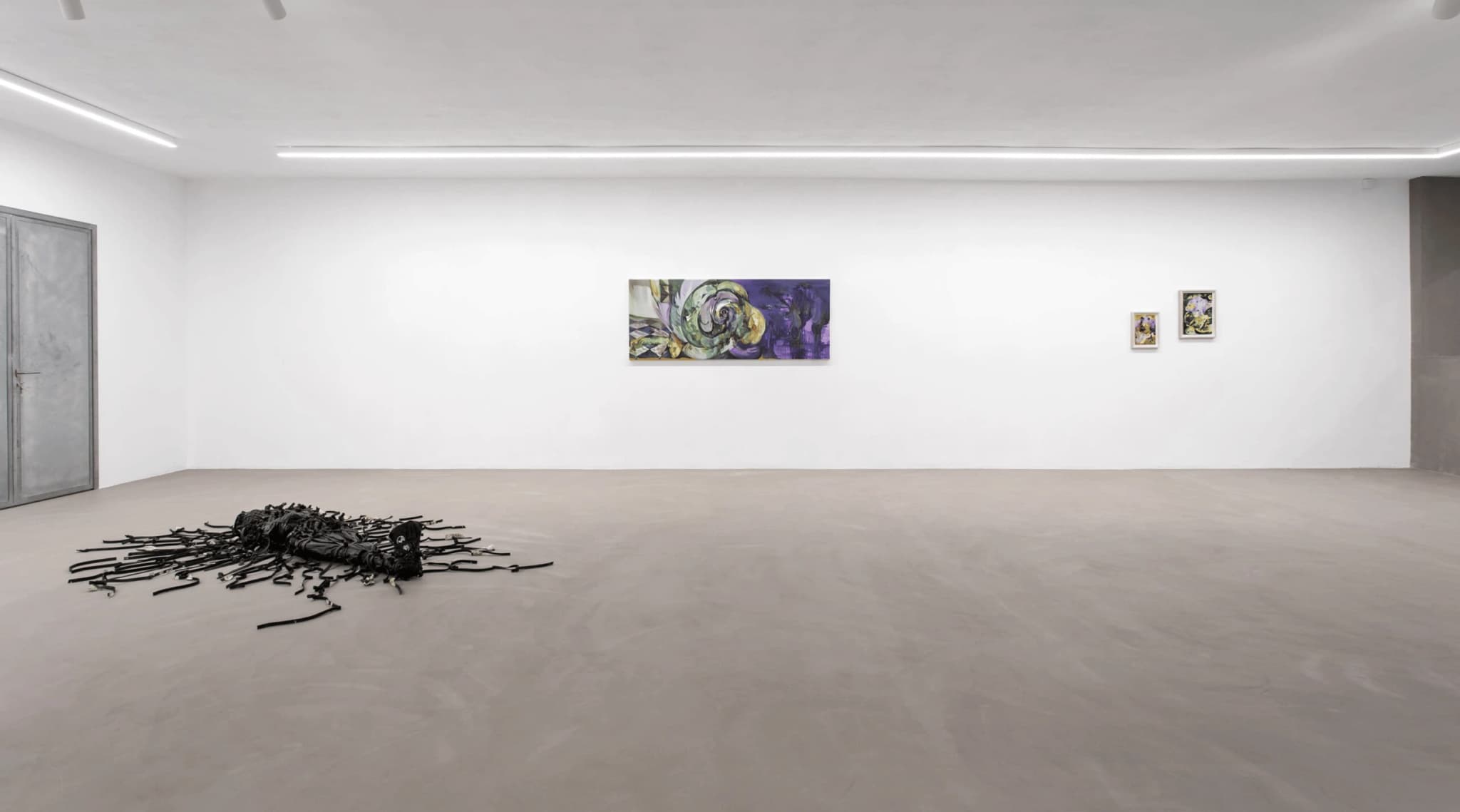
With: Maria Thereza Alves, Seana Gavin, Bianca Hlywa, Yulia Iosilzon, YaYa Yajie Liang, Hannah Rowan, Rain Wu.
Shorelines are places of constant, visible change, perceivable over hours instead of millennia. They were the location of the tetrapod's uncomfortable, wriggly and exhausting first steps or slithers within the intertidal zone between 390–360 million years ago, and they continue to shape the evolution of life today, serving as dynamic habitats where organisms must continually adapt to shifting tides and changing climates.
Shoreline is an exploration of this unique part of our world and its significance to humans, highlighting the ecological, geo-political, and aesthetic significance of coastal environments whilst understanding them as natural thresholds and areas of contamination-as-collaboration.
Providing us with hardy, diverse ecosystems and natural boundaries, shorelines operate in contrast to our human understanding of a boundary or border – the limit of an area or designated separation – and instead are thresholds marked by ceaseless negotiation. “It is a site of arrivals and departures, of safe harbours and hostile intrusions. At once embedded in local traditions and subject to industrial development, it hosts encounters between different populations and environments, the terrestrial and the aquatic.” ¹
These connection points are incubators for a huge variety of life and a strong example of surviving and living together through collaborative and symbiotic means. As a space of constant change and therefore constant vulnerability, Anna Tsing’s notion of contamination as a collaborative act holds relevance, as it is a space reliant on the unfolding relationships and encounters of different species, human and non-human. For instance, the tides help naturally regulate crab populations by allowing birds partial access to eat them; and the Gulf of Bothnia, the Red Sea and the Persian Gulf are all examples of designated borders created naturally by coastlines, some of which are seeing escalating crises partially exacerbated by shipping channels.
Having grown up in a seaside town in the UK, Hannah Rowan has had a longtime fascination with water and its role in connecting humans to earth. The works Undersea (2023) and To Hold an Ocean (2023) materialise Rowan’s research around marine ecosystems and the intertidal zone, looking at notions of time and memory in water, and the fragility and resilience of aquatic lifeforms. Comfortably fitting into the palm of your hand, oyster shells have been used to encapsulate her research as they hold “atmospheric memories” carried through water, encoding time and events in calcite layers like the strata in rocks. They also improve water quality, increase marine biodiversity, and protect shorelines from flood surges, playing an important part in their self-regulation.
Maria Thereza Alves’s short film Along the Coast (2003) documents a walk taken by the artist whilst on a residency. Having seen no animals for the entirety of her time spent there, Alves captures the moment she sees a dolphin in water contrasted with a dolphin balloon being sold nearby. Alongside the environmental commentary of this juxtaposition, the film regards the notion of cuteness in nature and our obsession with protecting animals or locations that have aesthetic appeal; coastal areas regularly fit into this category for their idyllic imagery that has become a common trope in media.
It is by no means an accident that Shoreline has been chosen to be realised on the island Mallorca, surrounded by 555 kilometres of coastline. Rain Wu’s series The Sea Rises and Totally Still maps islands in seawater and chalk on blue fabric. The artist's interest in mapping stems from her background as an architect and the 17th-century ‘Age of Exploration’, in which maps created of discovered locations served political agendas and disregarded native inhabitants and nuanced geological forms. Producing these works from perishable materials further highlights a coastline’s—or a map’s—changing state and their inability to provide non-isolated traits of a world.
YaYa Yajie Liang’s striking, large-scale paintings capture moments of metamorphosis between human, animal and mineral. These transformations can be likened to the changes and flux of shores, where land and sea continuously reshape one another. Liang’s work resonates with the concept of assisted evolution, where adaptation is accelerated by both natural forces and human intervention. Her improvised technique further embodies the unpredictability of life in these areas, with fluid, expressive brushwork and layered textures mirroring the ever-shifting boundaries between forms, species, and environments.
Highly unique, Bianca Hlywa’s experiments with SCOBYs (Symbiotic Culture of Bacteria and Yeast) are barely believable. Trek Trax features a dried SCOBY cut out into an anatomical drawing of a figure flipping backwards. The figure is partially anatomical and partially clothed, with hip bones, ribs, a femur, flesh, socks and running shoes. These shapes merge with the imagery of a coastline in the background. The work refers to the balancing forces of nature—decay and erosion. In the ground or on the shore, both commodities and bodies are treated equally as materials, stripped of their connotations or histories.
Seana Gavin’s work explores memory and altered realities through surreal collage compositions. Her dreamlike landscapes evoke elements of shorelines and natural boundaries, showing complex multiplicities in which segments are interrelated through fluidity and transition. After the Floods (2017) is a more literal exploration of our changing climate and the impact that it is, and will be, having on our coast and land, showing through found images the aftermath of erosion and flooding.
Presenting two new paintings on paper, Yulia Iosilzon conjures a world that lives between fantasy and reality, inhabited by amorphous figures. Her paintings are idealistic notions of nature filled with potential and vibrancy that challenge us to look for the beauty we so often miss in the 21st century. As our world becomes more polluted and damaged, we need reminders of what we are missing, particularly in relation to coastal areas where this type of degradation becomes so obvious.
Rachael Louise Bailey’s environmentally charged practice has engaged with a specific marine pollutant she has been researching since 2015, self-titled The Black Stuff. These spliced inner tubes of repurposed car tyres are used internationally as part of oyster sea-farming equipment. Unfit for purpose, they break loose in the sea, and what does not sink into the seabed arrives back upon the shoreline. Her works Cohabitation (2017) and Rest (2019) are two pieces from this series.
In Rest (2019), moved by the experience of clearing the contents of her cousin’s home weeks after his sudden death, the artist was struck by the sheer volume of plastic waste destined for landfill. From this material—remnants of a life shaped by consumption and unsustainability—a skeletal figure began to take form: a coat hanger collarbone, a bike helmet chest, an alarm clock heart, fingers made of pens. Clothed in his smartest suit, wearing a favourite Father Christmas hat, and mummified in a polyester bedsheet, the figure was laid to rest in a plastic inflatable bed and encased in woven ‘black stuff’. This sculptural work reflects on grief, memory, and the persistent presence of the synthetic in life—and after.
¹ Erika Balsom, “Shoreline Movements,” e-flux.


Works
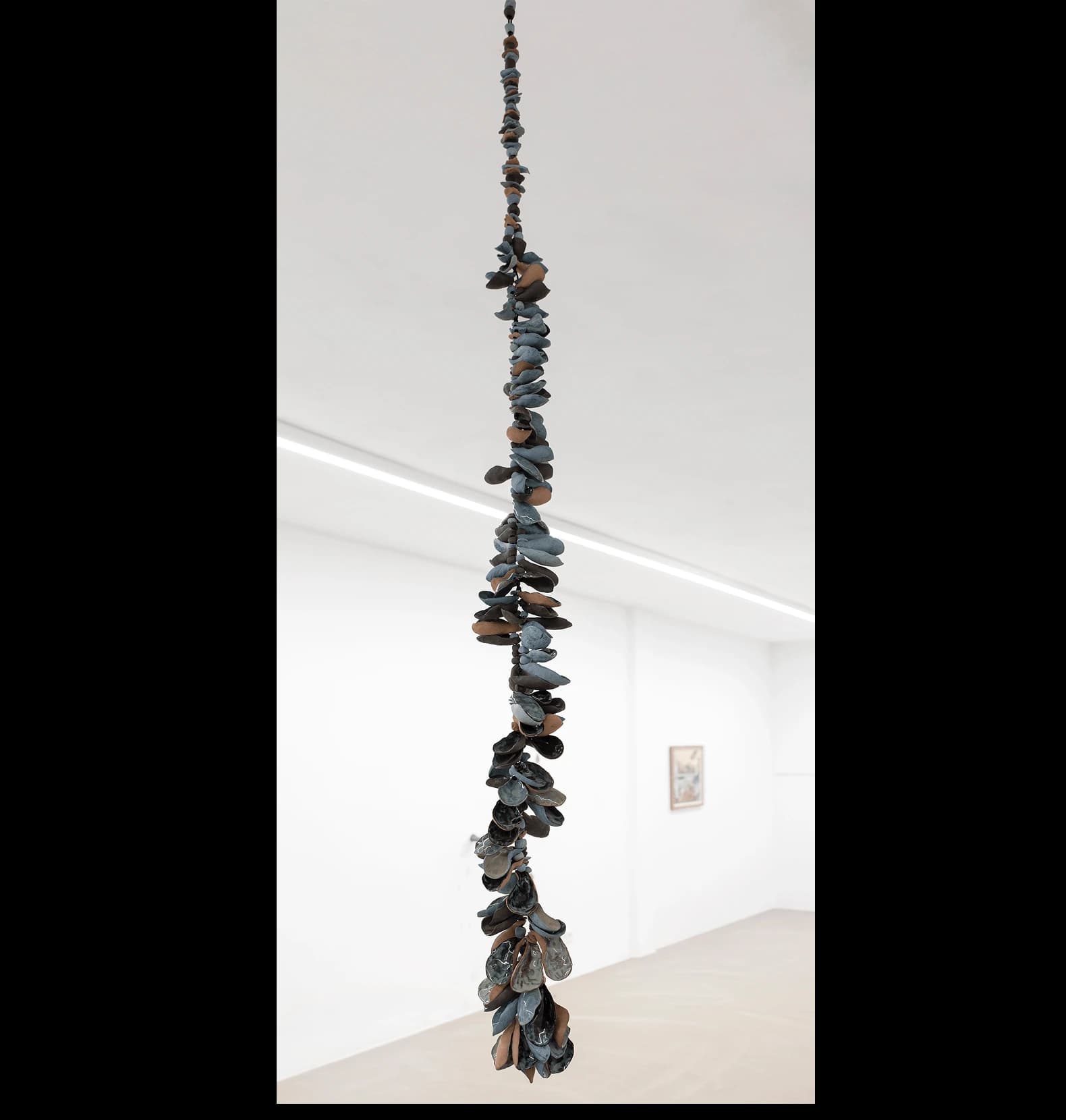
Undersea
Stained porcelain, black stoneware, glaze, nylon wire and hardware
200 x 13 cm
Undersea
Hannah Rowan
Stained porcelain, black stoneware, glaze, nylon wire and hardware
200 x 13 cm
Enquire
Enquire
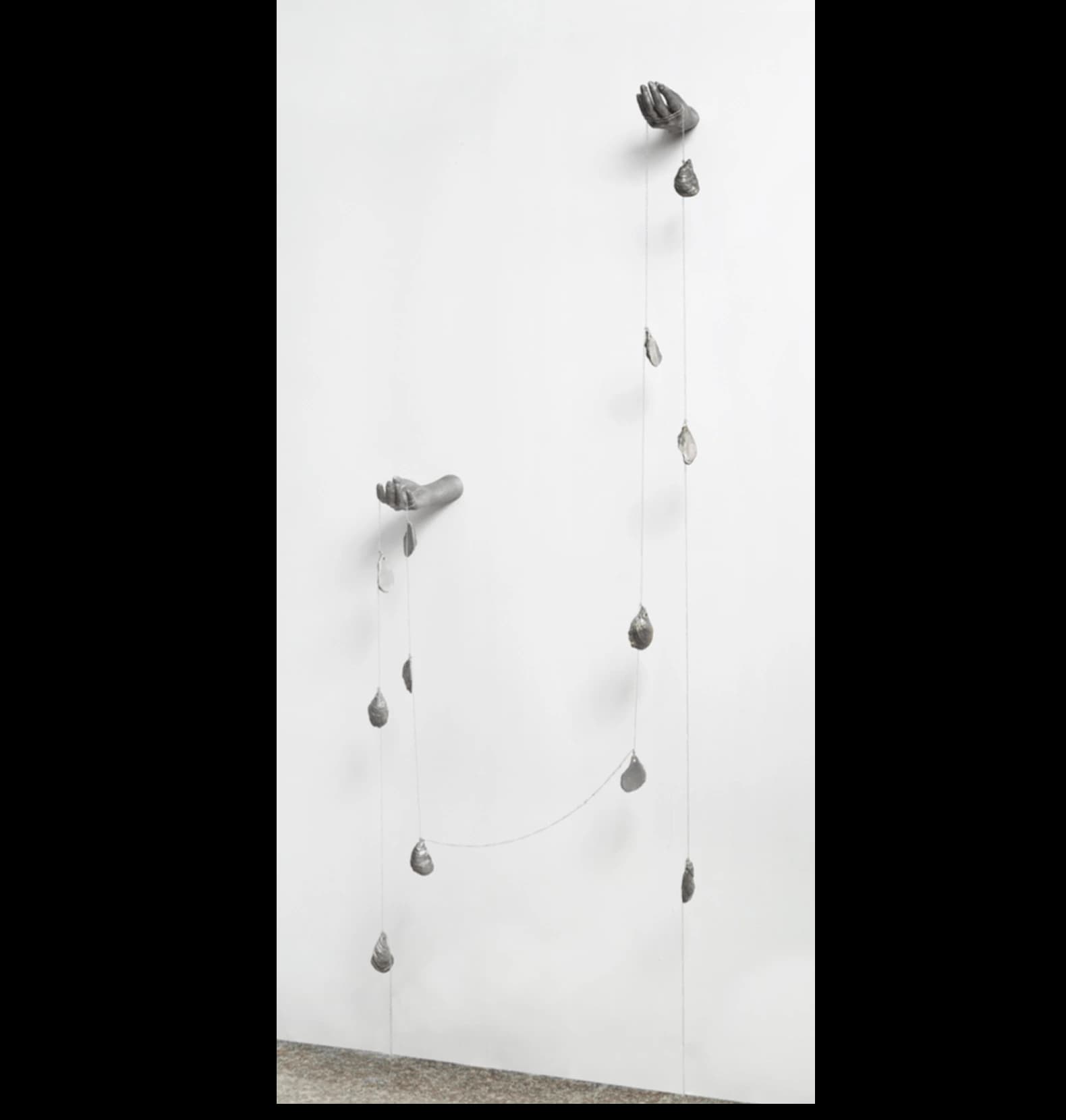
To Hold an Ocean
Cast aluminium and chain
Variable dimensions
To Hold an Ocean
Hannah Rowan
Cast aluminium and chain
Variable dimensions
Enquire
Enquire
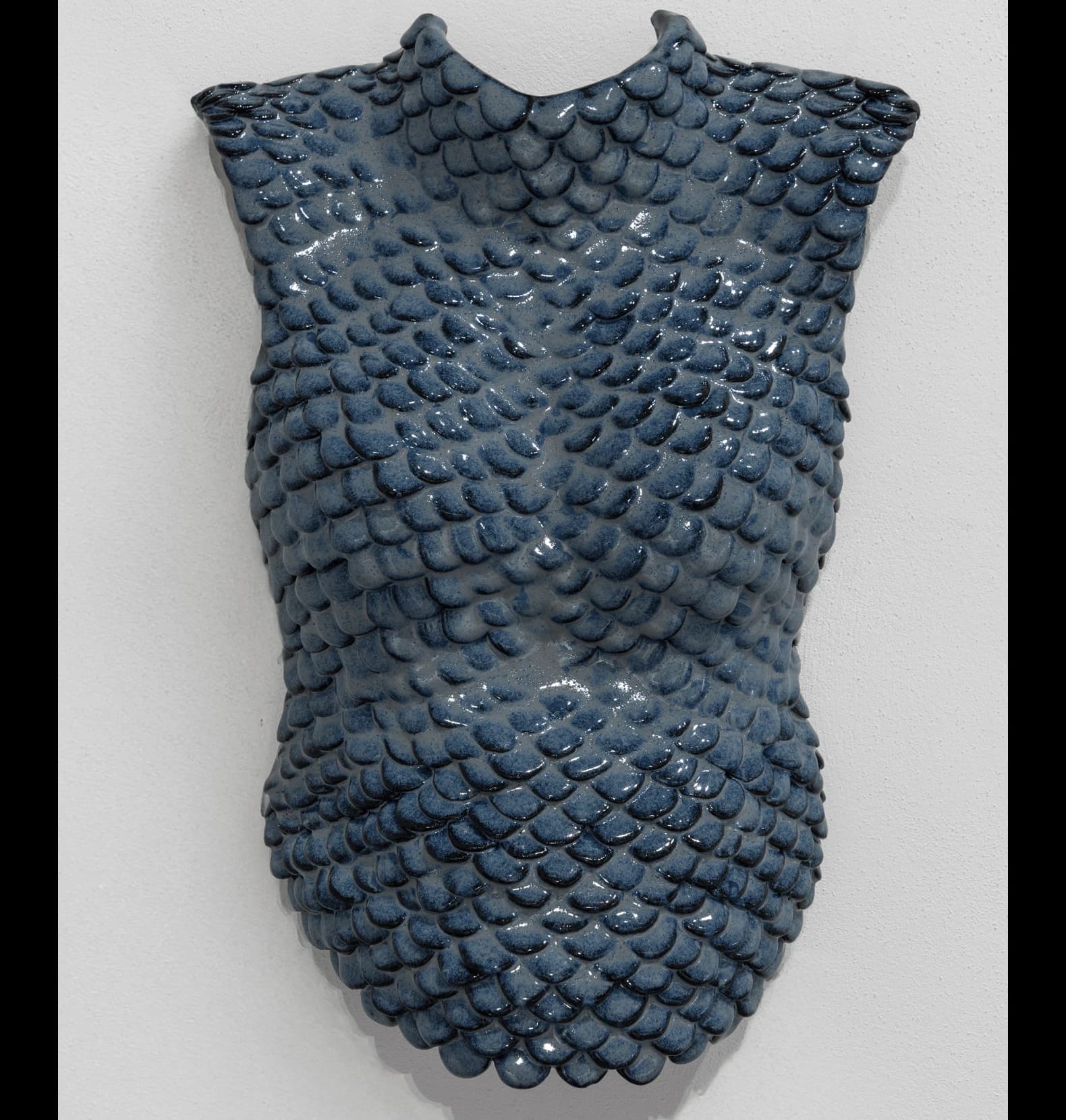
Armour for Matrescense
Glazed black stoneware
50 x 45 x 10 cm
Armour for Matrescense
Hannah Rowan
Glazed black stoneware
50 x 45 x 10 cm
Enquire
Enquire
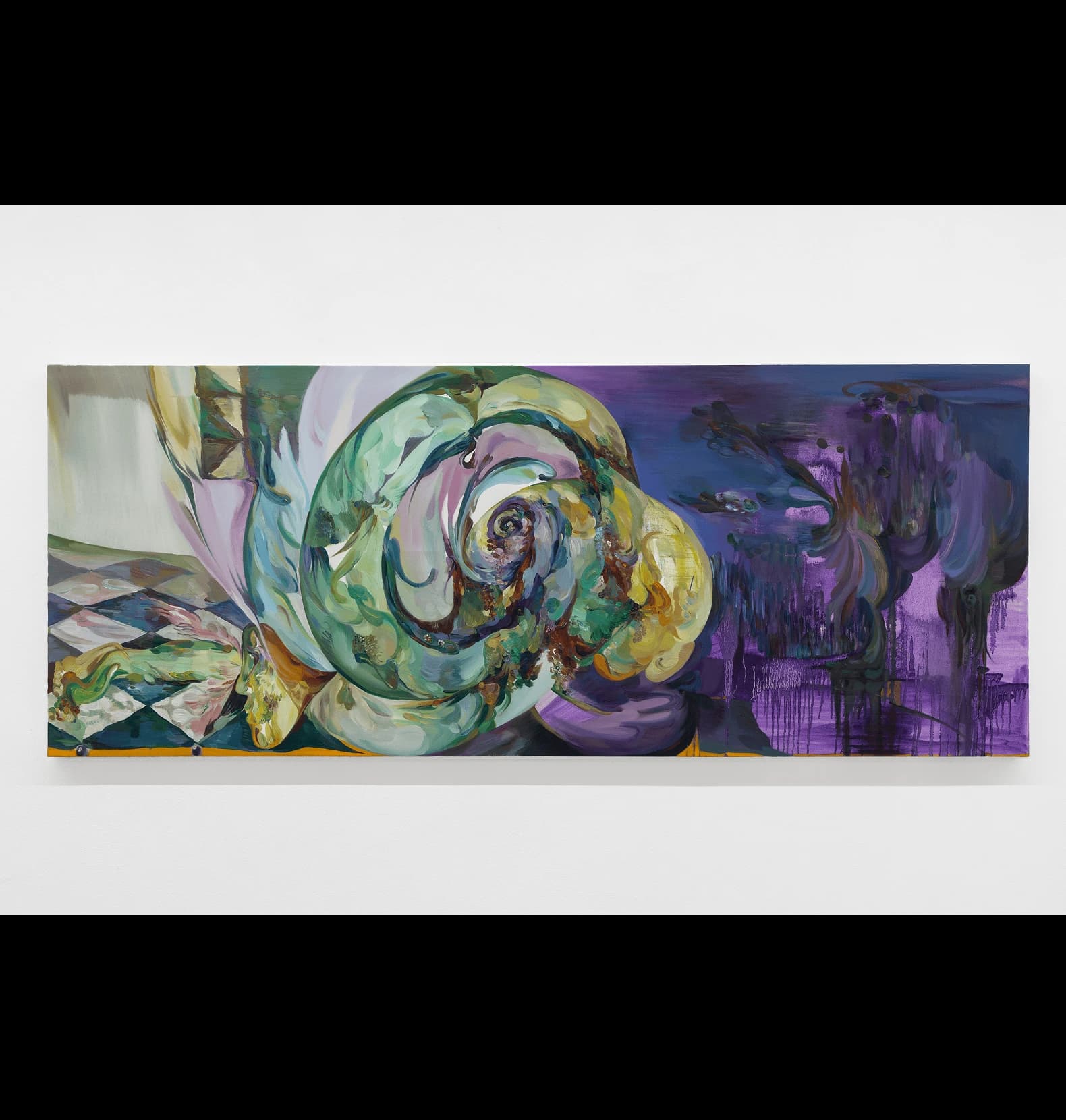
You Whisper Within The Spiral
Oil on canvas
80 x 200 cm
You Whisper Within The Spiral
YaYa Yajie Liang
Oil on canvas
80 x 200 cm
Enquire
Enquire
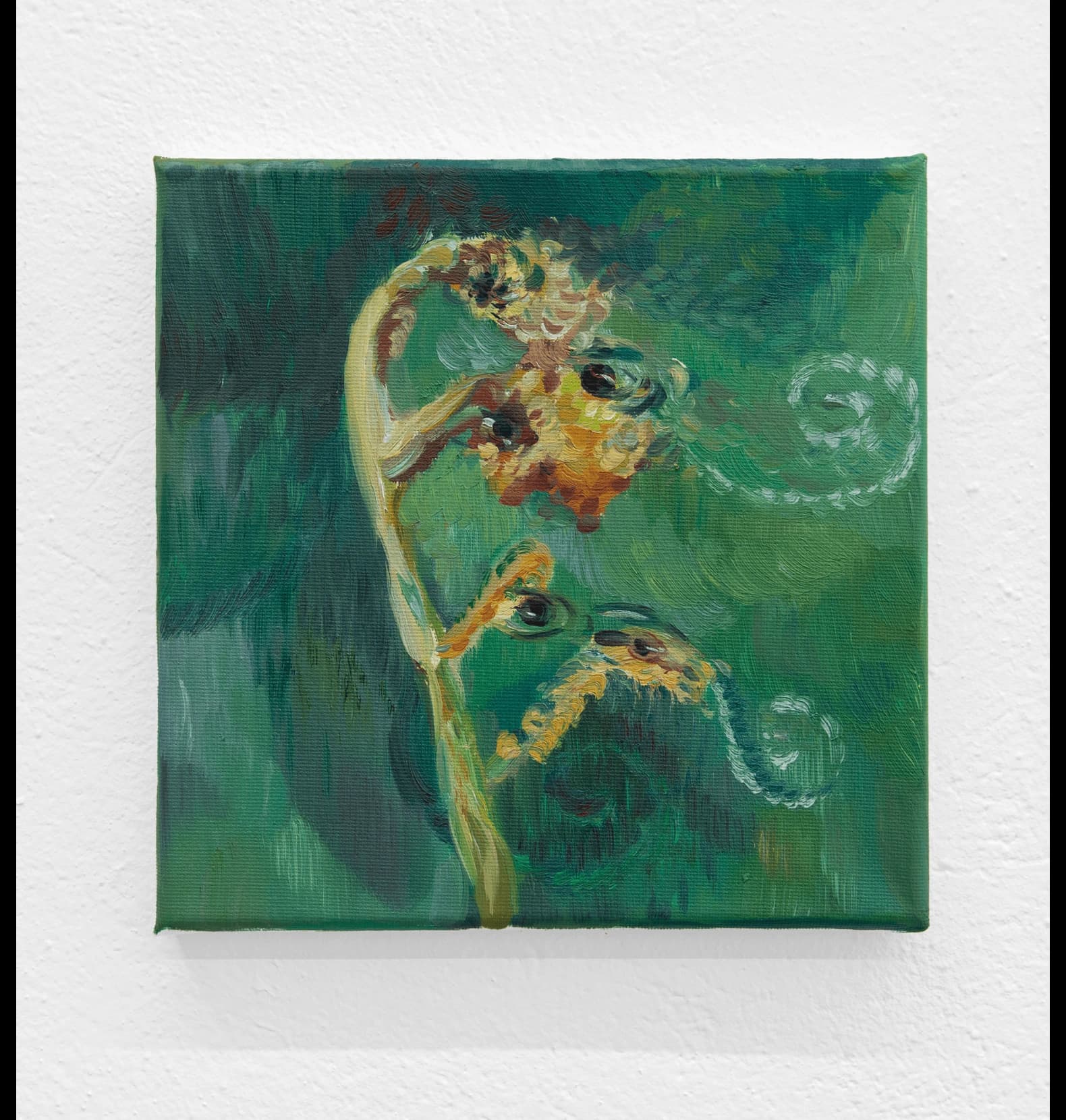
Open My Eyes
Oil on canvas
20 x 20 cm
Open My Eyes
YaYa Yajie Liang
Oil on canvas
20 x 20 cm
Enquire
Enquire
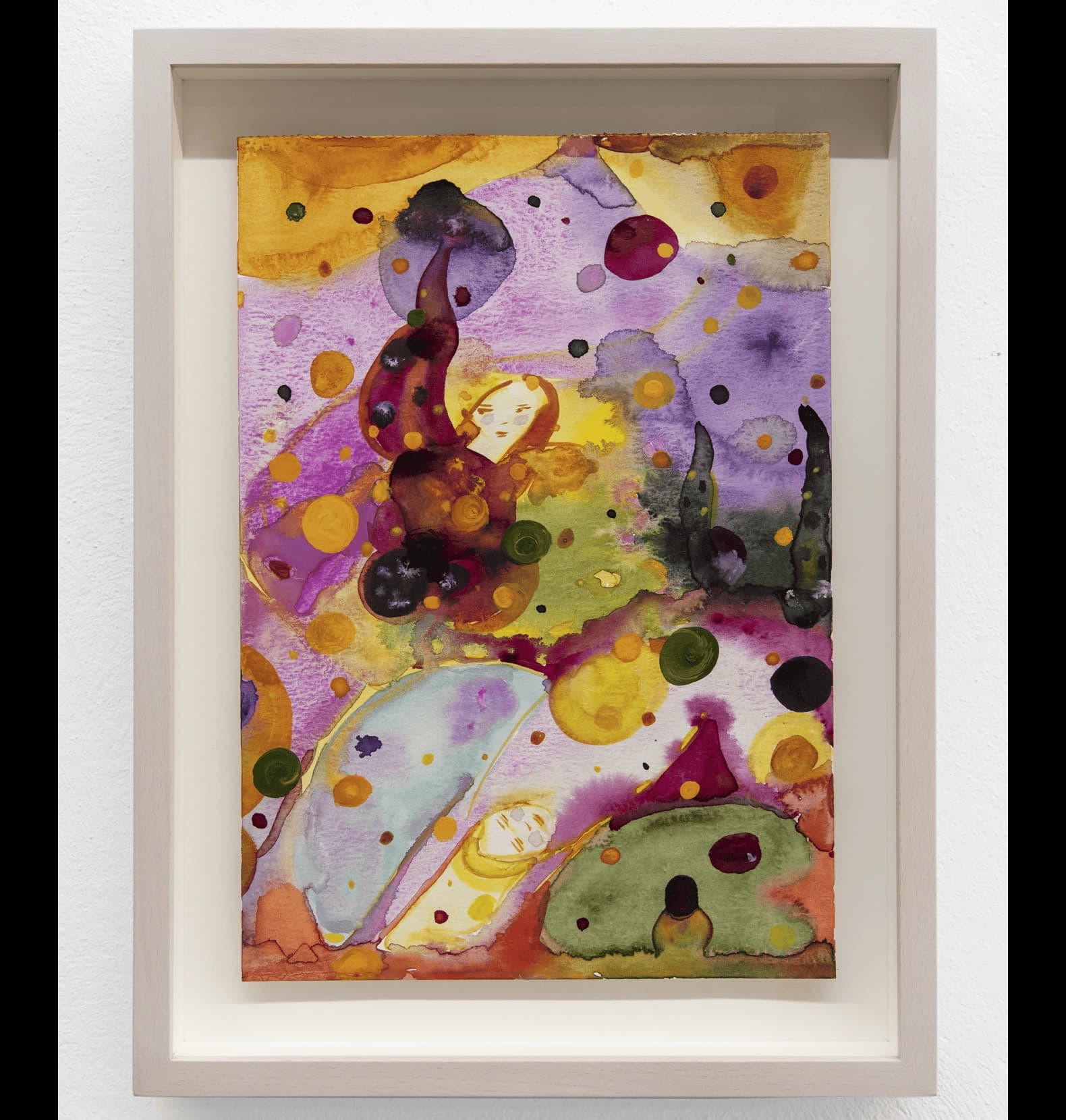
Two Moons
Watercolour on paper
36 x 27.5 cm
Two Moons
Yulia Iosilzon
Watercolour on paper
36 x 27.5 cm
Enquire
Enquire
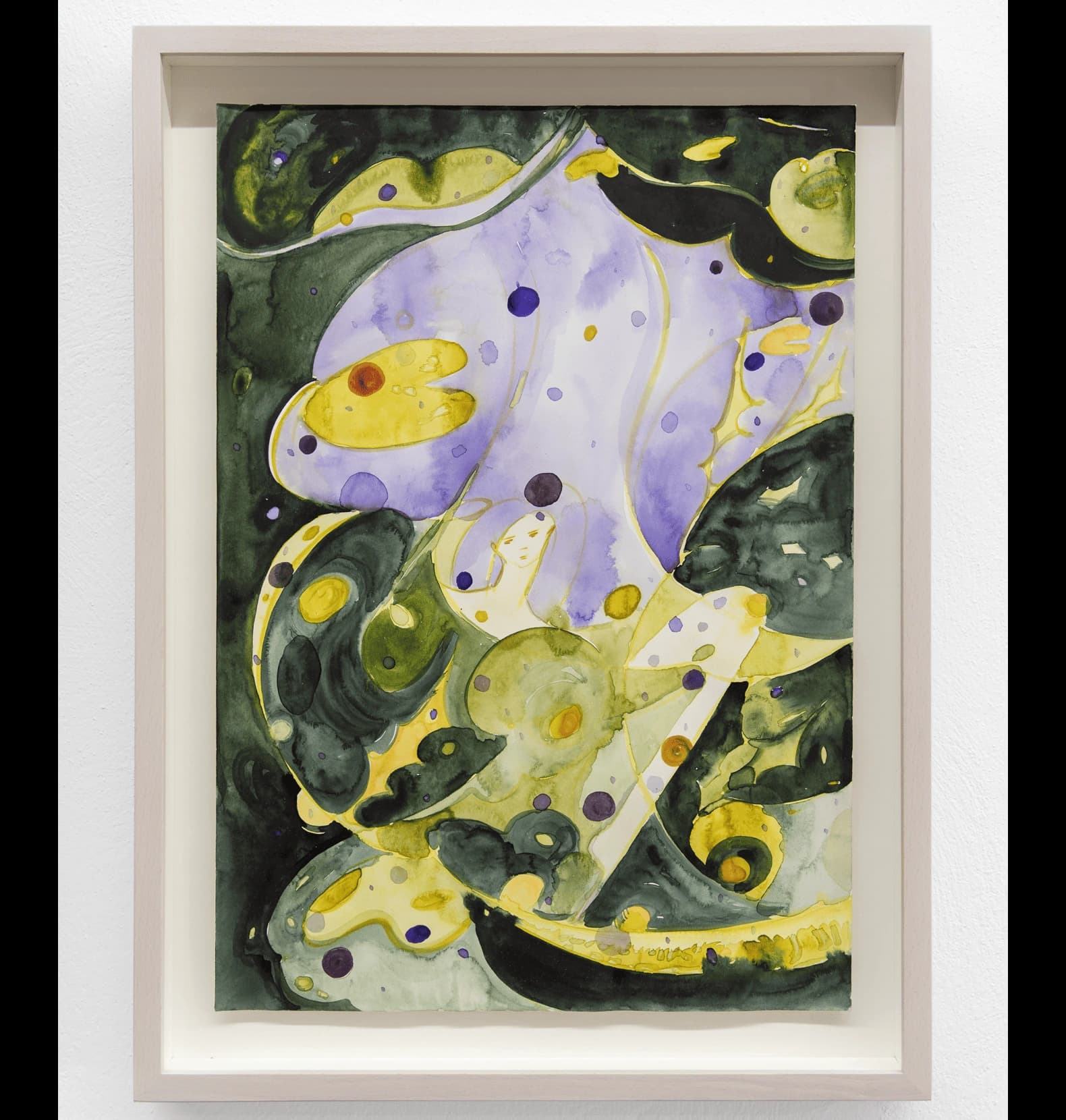
Purple Cloud's Shadow
Watercolour on paper
48.5 x 36 cm
Purple Cloud's Shadow
Yulia Iosilzon
Watercolour on paper
48.5 x 36 cm
Enquire
Enquire
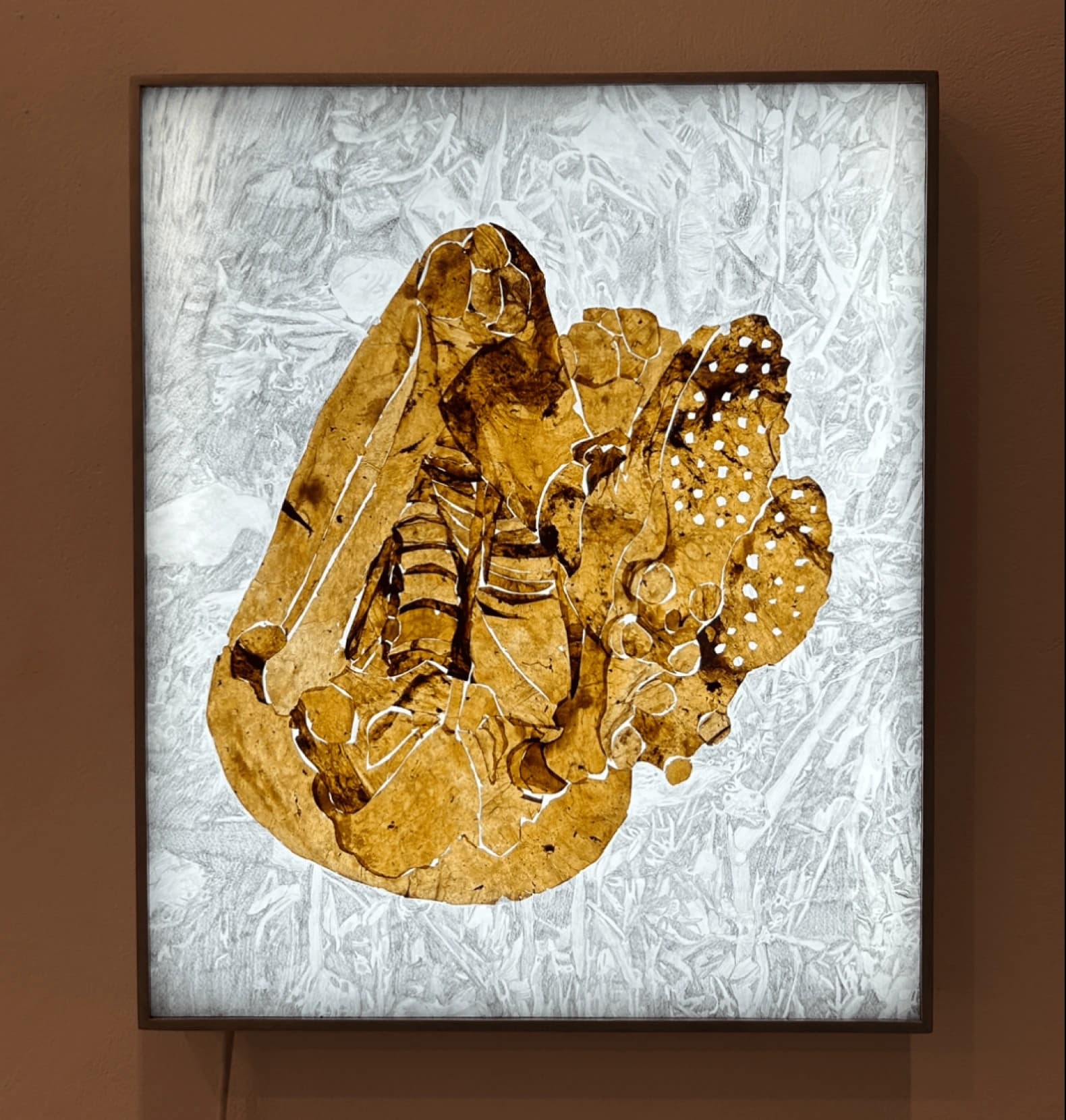
Trek Trax
Pencil, tracing paper, dried SCOBY, LED light, aluminium and steel frame
60 x 50 x 6 cm
Trek Trax
Bianca Hlywa
Pencil, tracing paper, dried SCOBY, LED light, aluminium and steel frame
60 x 50 x 6 cm
Enquire
Enquire
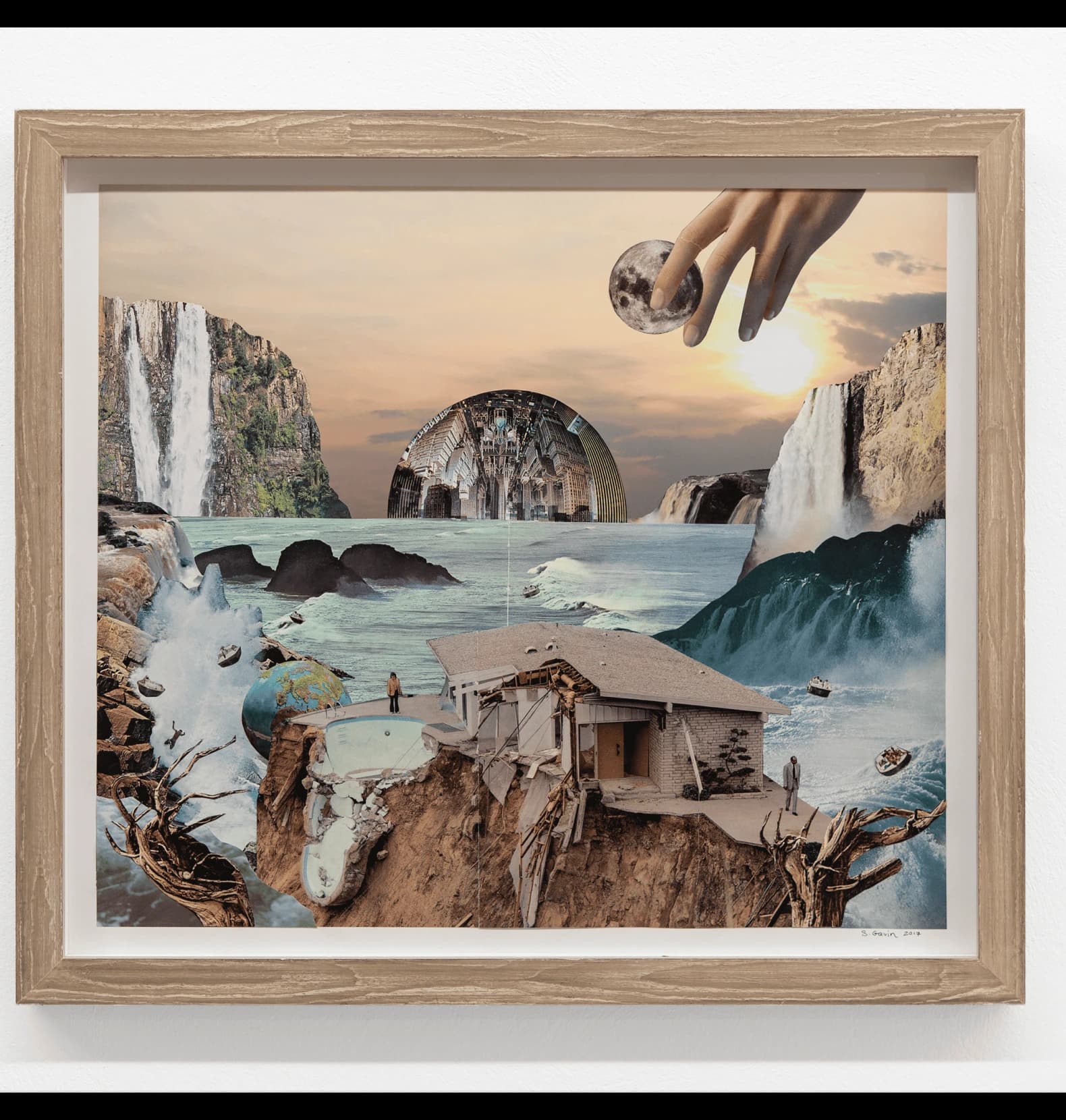
After The Floods
Hand cut collage on card
53 x 60 cm
After The Floods
Seana Gavin
Hand cut collage on card
53 x 60 cm
Enquire
Enquire
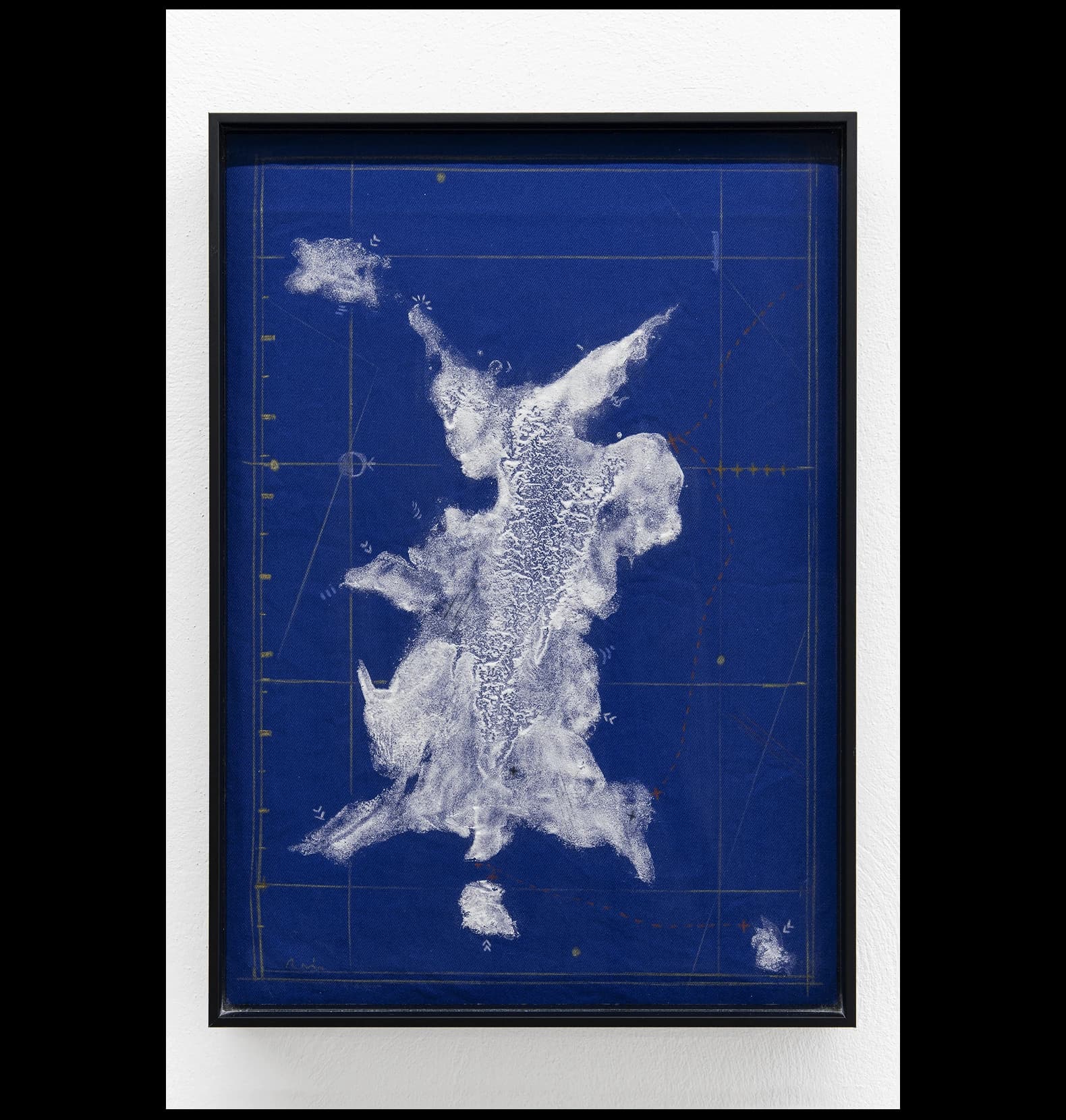
The Sea Rises and Totally Still III 14
Fabric, sea water, salt and chalk
32 x 46 cm
The Sea Rises and Totally Still III 14
Rain Wu
Fabric, sea water, salt and chalk
32 x 46 cm
Enquire
Enquire
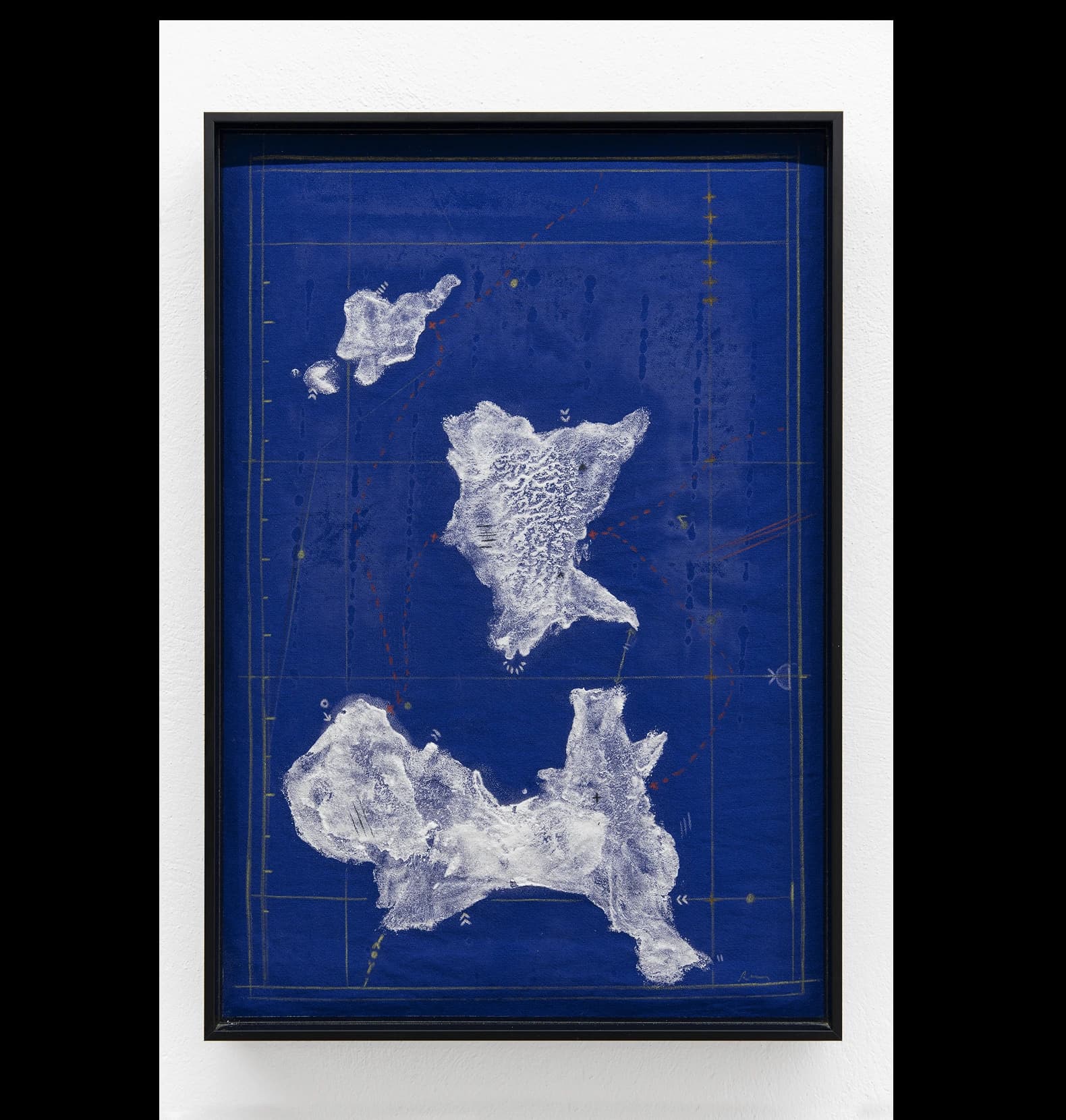
The Sea Rises and Totally Still III 15
Fabric, sea water, salt and chalk
32 x 47 cm
The Sea Rises and Totally Still III 15
Rain Wu
Fabric, sea water, salt and chalk
32 x 47 cm
Enquire
Enquire
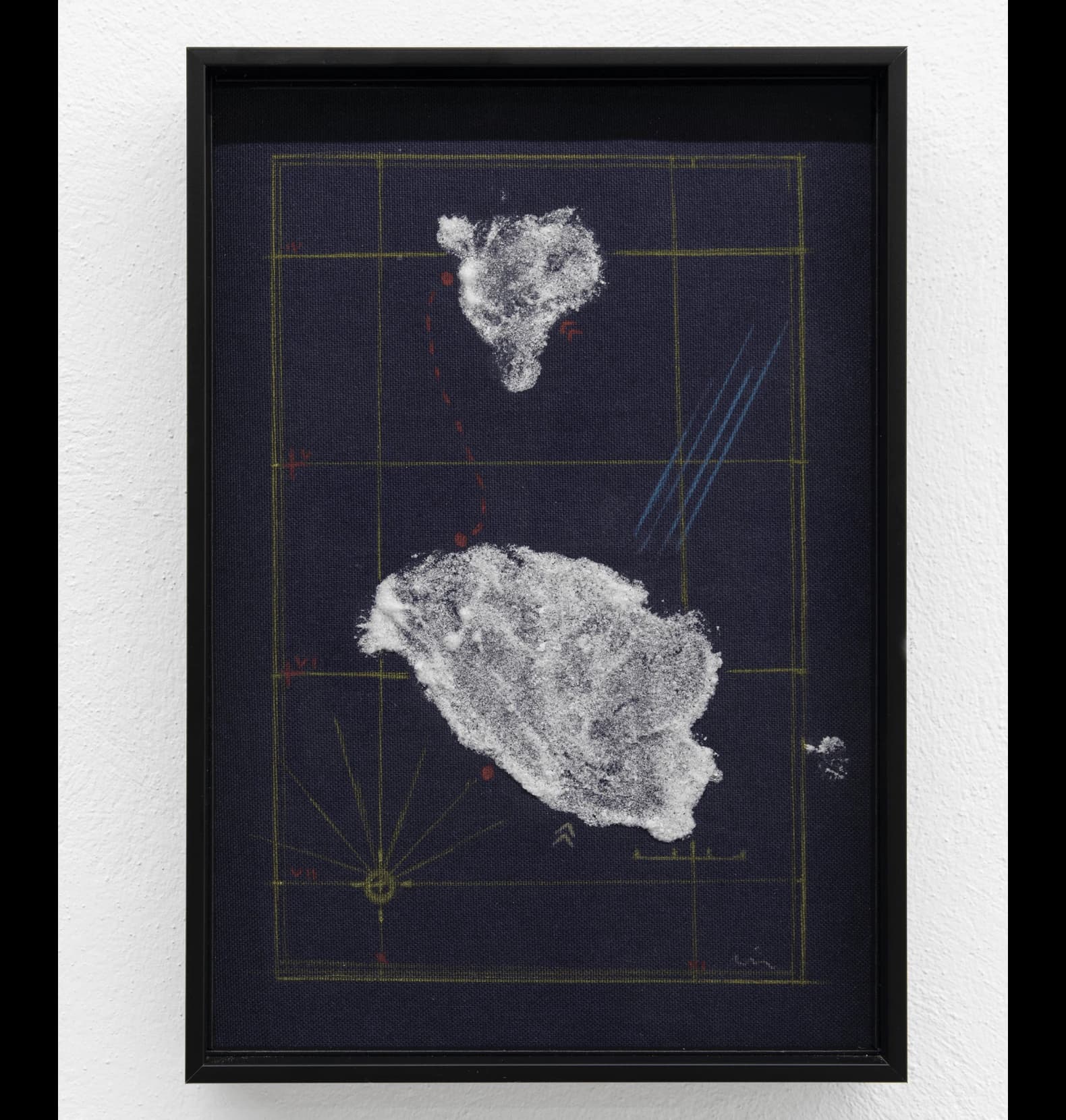
The Sea Rises and Totally Still III 04
Fabric, sea water, salt and chalk
20 x 29 cm
The Sea Rises and Totally Still III 04
Rain Wu
Fabric, sea water, salt and chalk
20 x 29 cm
Enquire
Enquire
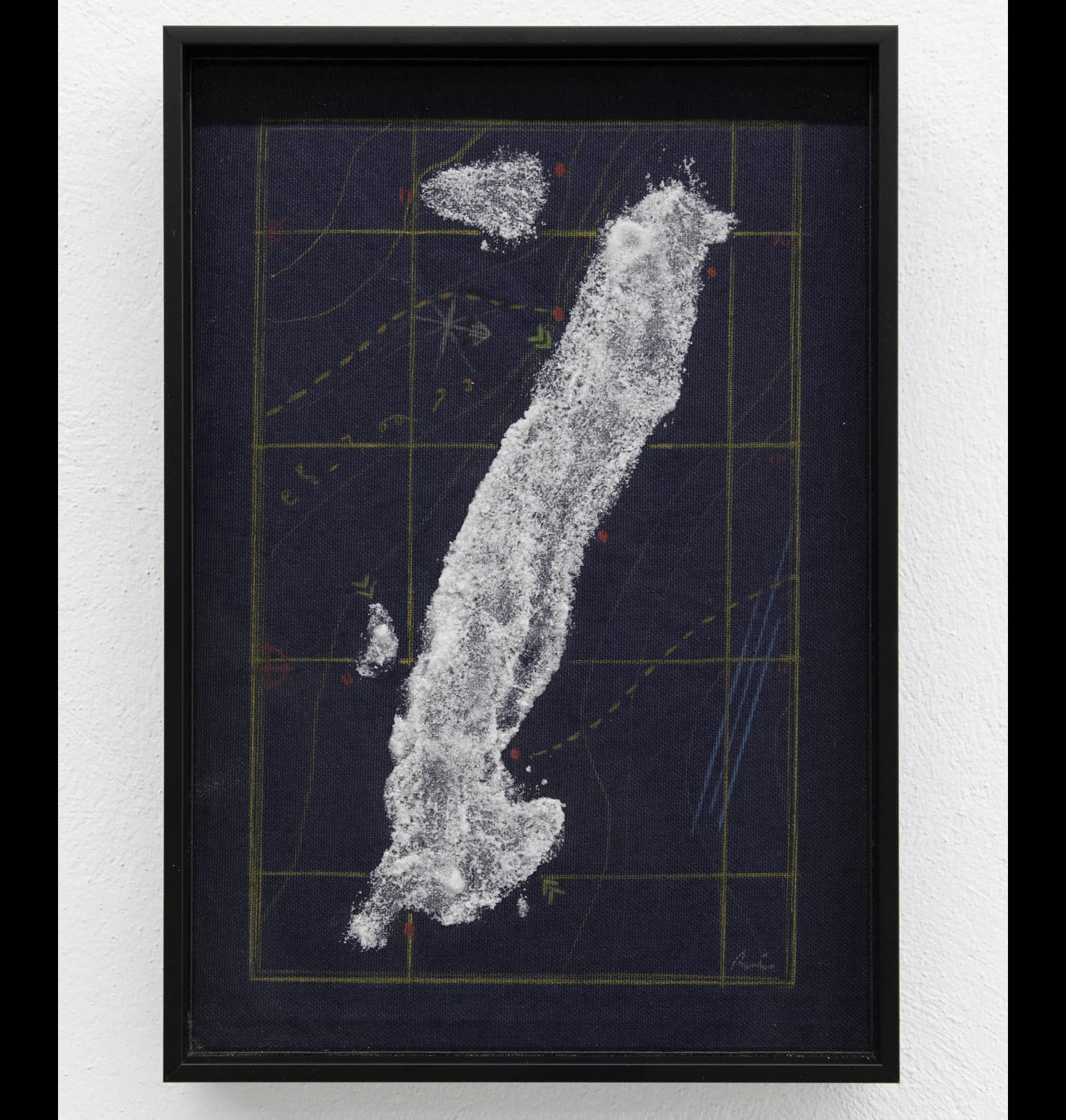
The Sea Rises and Totally Still III 08
Fabric, sea water, salt and chalk
20 x 29 cm
The Sea Rises and Totally Still III 08
Rain Wu
Fabric, sea water, salt and chalk
20 x 29 cm
Enquire
Enquire
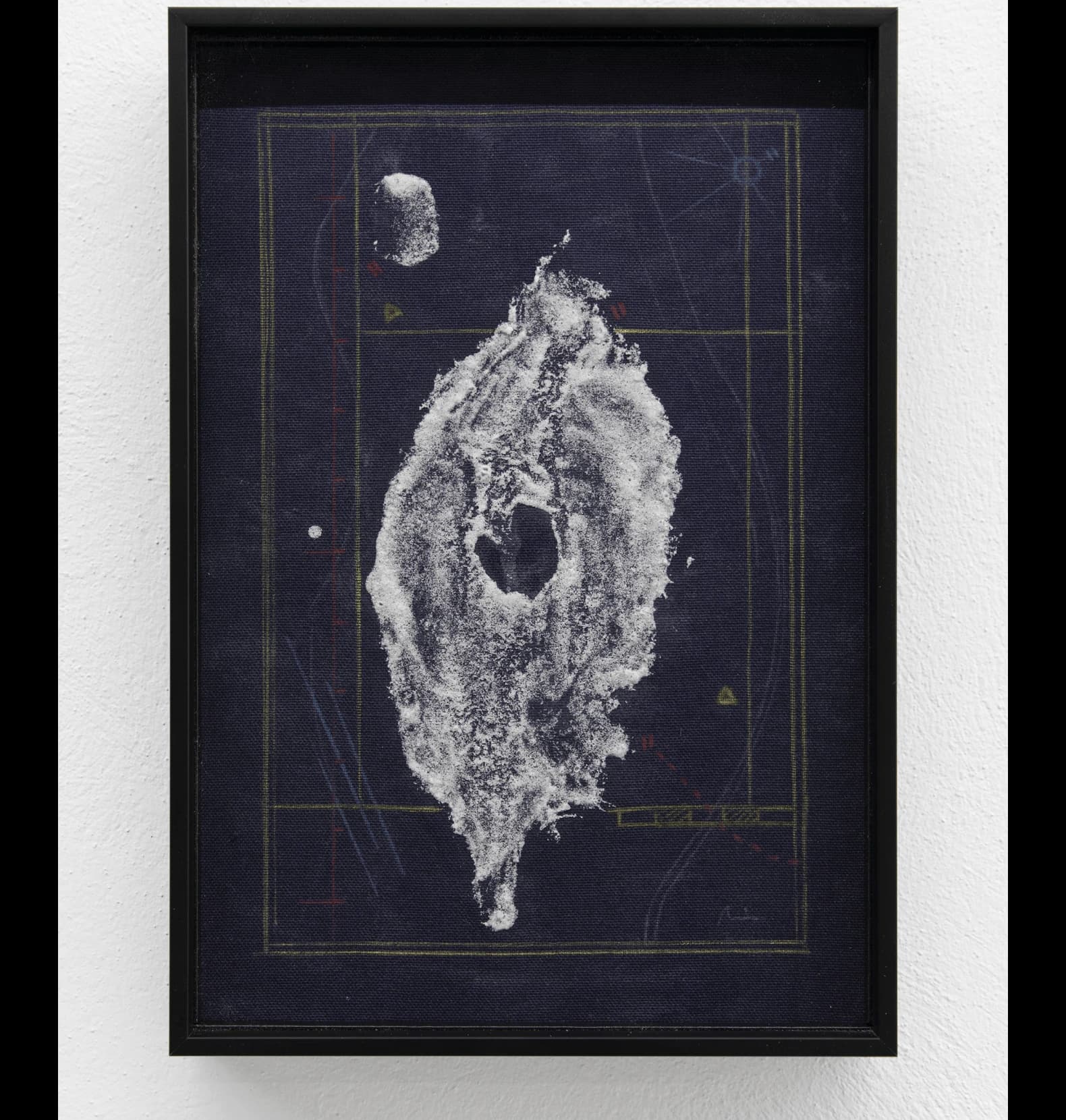
The Sea Rises and Totally Still III 06
Fabric, sea water, salt and chalk
20 x 29 cm
The Sea Rises and Totally Still III 06
Rain Wu
Fabric, sea water, salt and chalk
20 x 29 cm
Enquire
Enquire
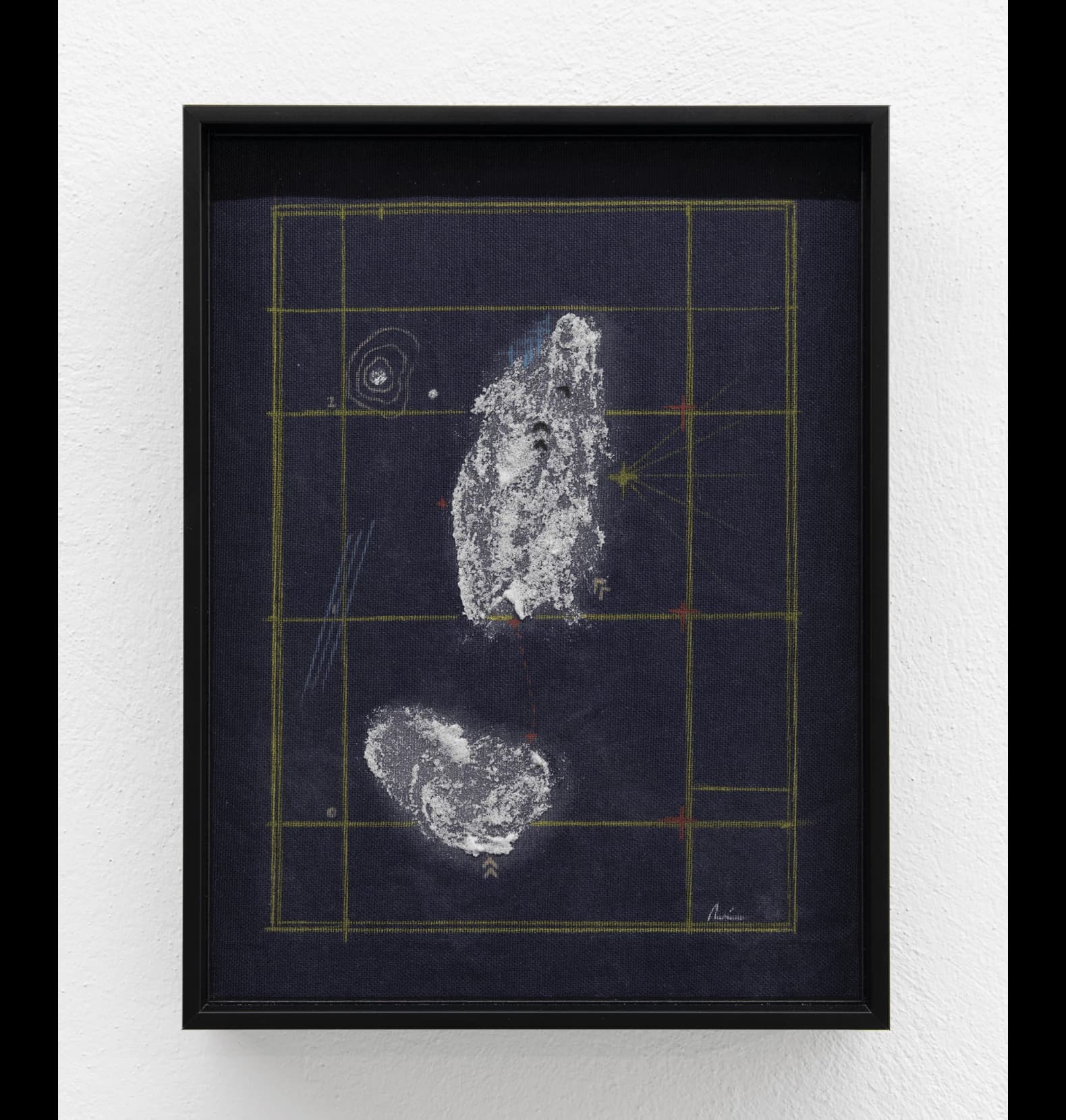
The Sea Rises and Totally Still III 02
Fabric, sea water, salt and chalk
20 x 26 cm
The Sea Rises and Totally Still III 02
Rain Wu
Fabric, sea water, salt and chalk
20 x 26 cm
Enquire
Enquire
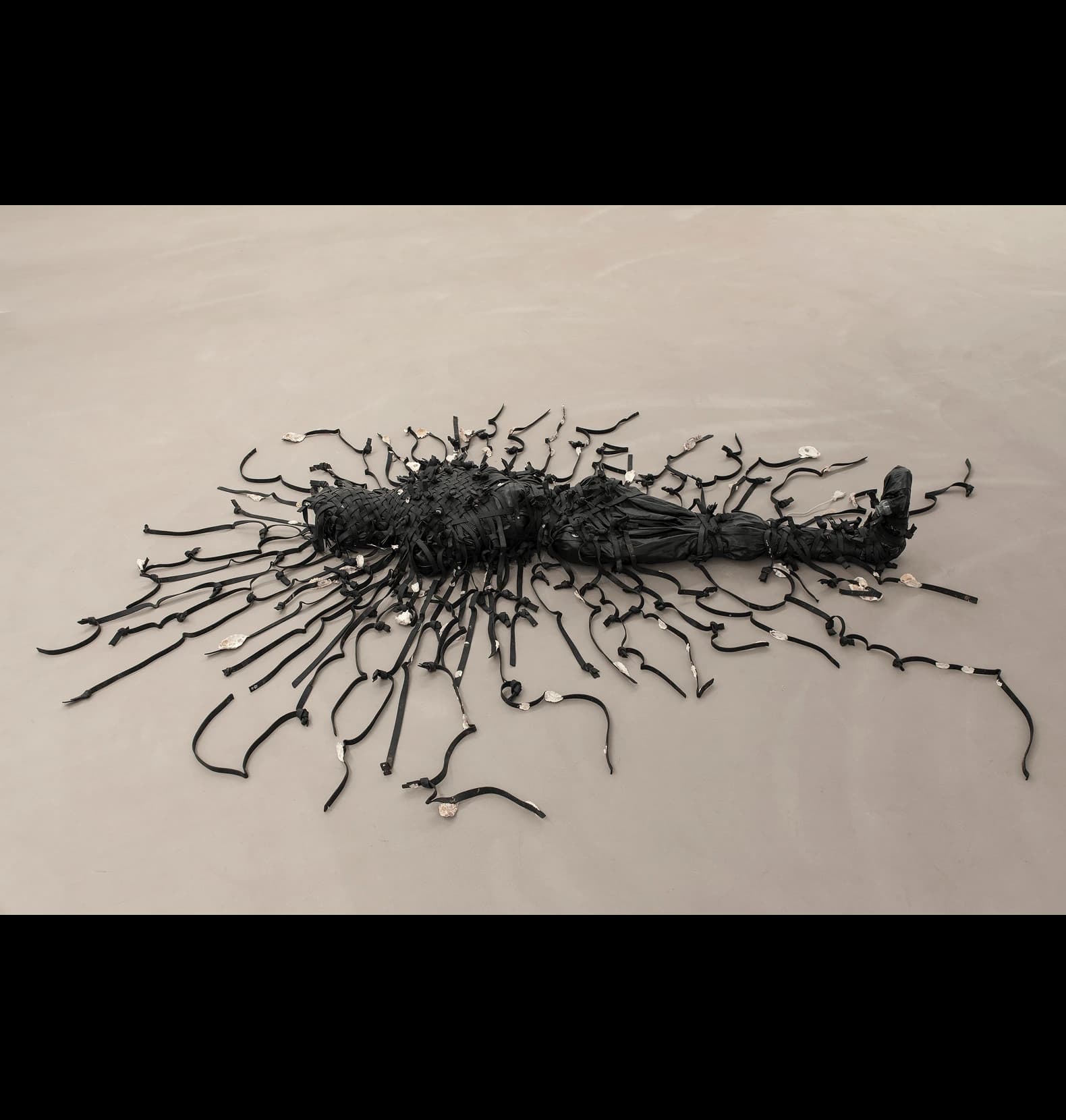
Rest
Mixed Media
180 x 50 x 35 cm
Rest
Rachael Louise Bailey
Mixed Media
180 x 50 x 35 cm
Enquire
Enquire
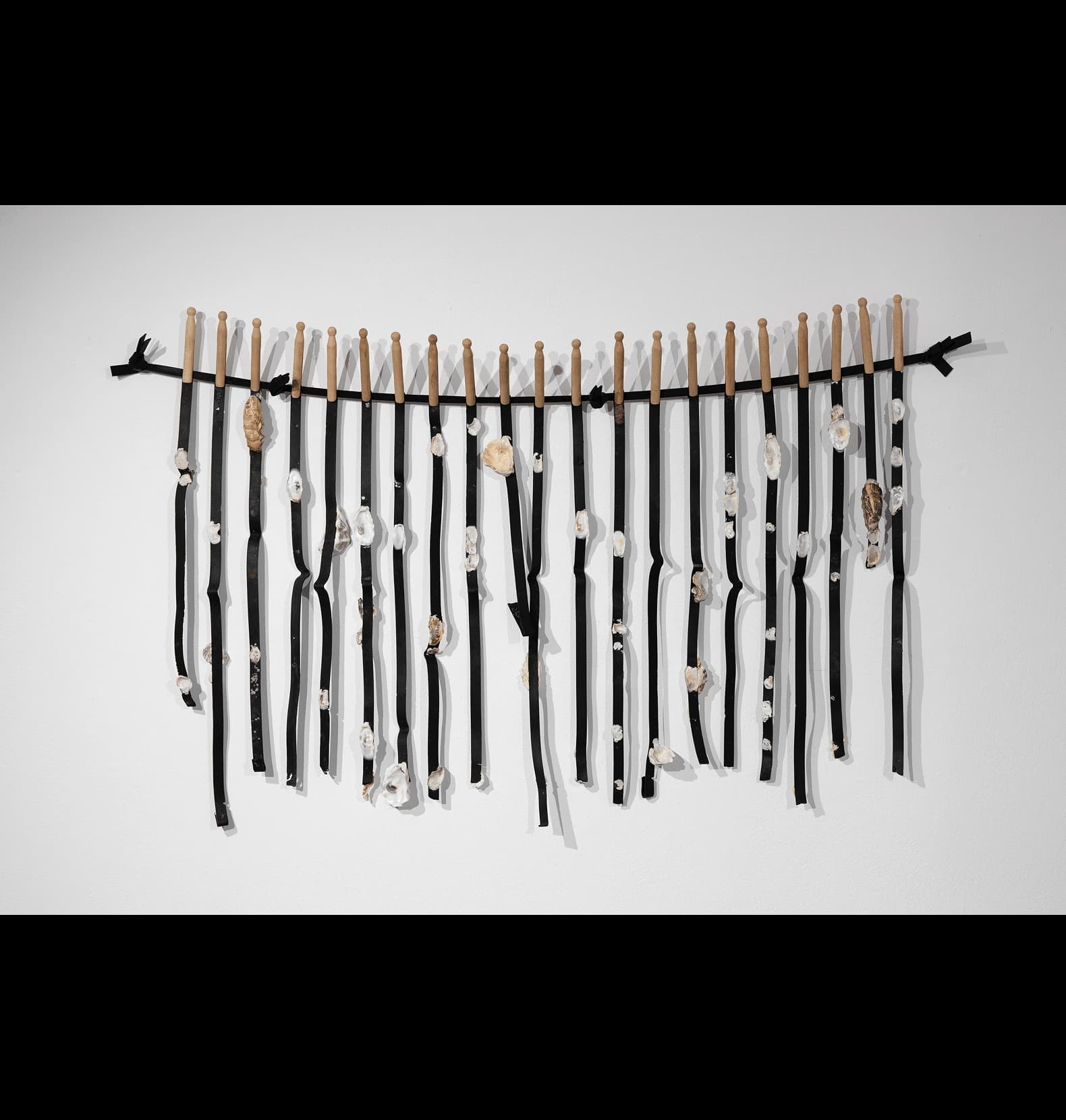
Cohabitation
The Black Stuff, oysters, wooden pegs
250 x 40 cm
Cohabitation
Rachael Louise Bailey
The Black Stuff, oysters, wooden pegs
250 x 40 cm