SUNTOPIA
Anna Gonzalez Noguchi
04.06.26 — 04.09.26
With: Anna Gonzalez Noguchi.
SUNTOPIA brings together a new series of works by Anna Gonzalez Noguchi built from the materials, systems, and residue of everyday life: bath towels, gardening magazines, photographs, pharmaceutical branded magnets, buttons, jar lids, aluminium canisters, pill boxes, diaries and planners. Objects that reflect systems of storage and domestic organisation, routine and daily maintenance, personal archiving and inherited forms of care. Objects close to home. Objects kept and stored away long after their intended use. Objects that, once removed from their original function, are read differently. They start to register through parameters like where they are positioned and how they are grouped, placing a new kind of attention on them. And from there, it opens up into a wider reflection on how keepsakes shape and influence the way we live, express ourselves, and construct personal histories.
Working across sculpture, collage and installation, Gonzalez Noguchi removes, reorganises and reconstructs these familiar objects and keepsakes. She places them into precise arrangements and onto carefully constructed surfaces that reveal a fascination both with industrial production and traditional craft. Informed by her Japanese and Spanish heritage, her work moves across different geographic and emotional territories, tracing the ways that personal histories travel across generations, carried through habits, domestic rituals, and the ordinary objects people choose to retain. Her work starts from a simple question: what does it mean to possess objects, to store them and to embed memory within them?
Look at something long enough and it will begin to shift before your eyes:
A metallic pole becomes an orchid stem. A jar lid becomes a flower petal. A towel becomes a document, a carrier of objects. A magazine cutting becomes a memorial, a marker of return. A number becomes a reference code, a way of holding time in place, a way of remembering.
The exhibition title itself carries this layered quality: SUNTOPIA takes its name from a hybrid orchid, Laeliocattleya, also known as Nice Holiday, cultivated in Japan in the early 1990s. It also creates new associations with sunlight, energy, fantasy, and the idealised image of holiday destinations such as Mallorca, where this exhibition takes place.
Across the exhibition, orchids appear again and again. They originate from Gonzalez Noguchi´s grandfather´s meticulous archive, made of diary entries, photographs, and gardening magazines. From this personal archive, the orchid becomes a system of classification and care, a practice carried forward across generations.
Across the exhibition, orchids appear again and again. They originate from Gonzalez Noguchi´s grandfather´s meticulous archive, made of diary entries, photographs, and gardening magazines. From this personal archive, the orchid becomes a system of classification and care, a practice carried forward across generations.
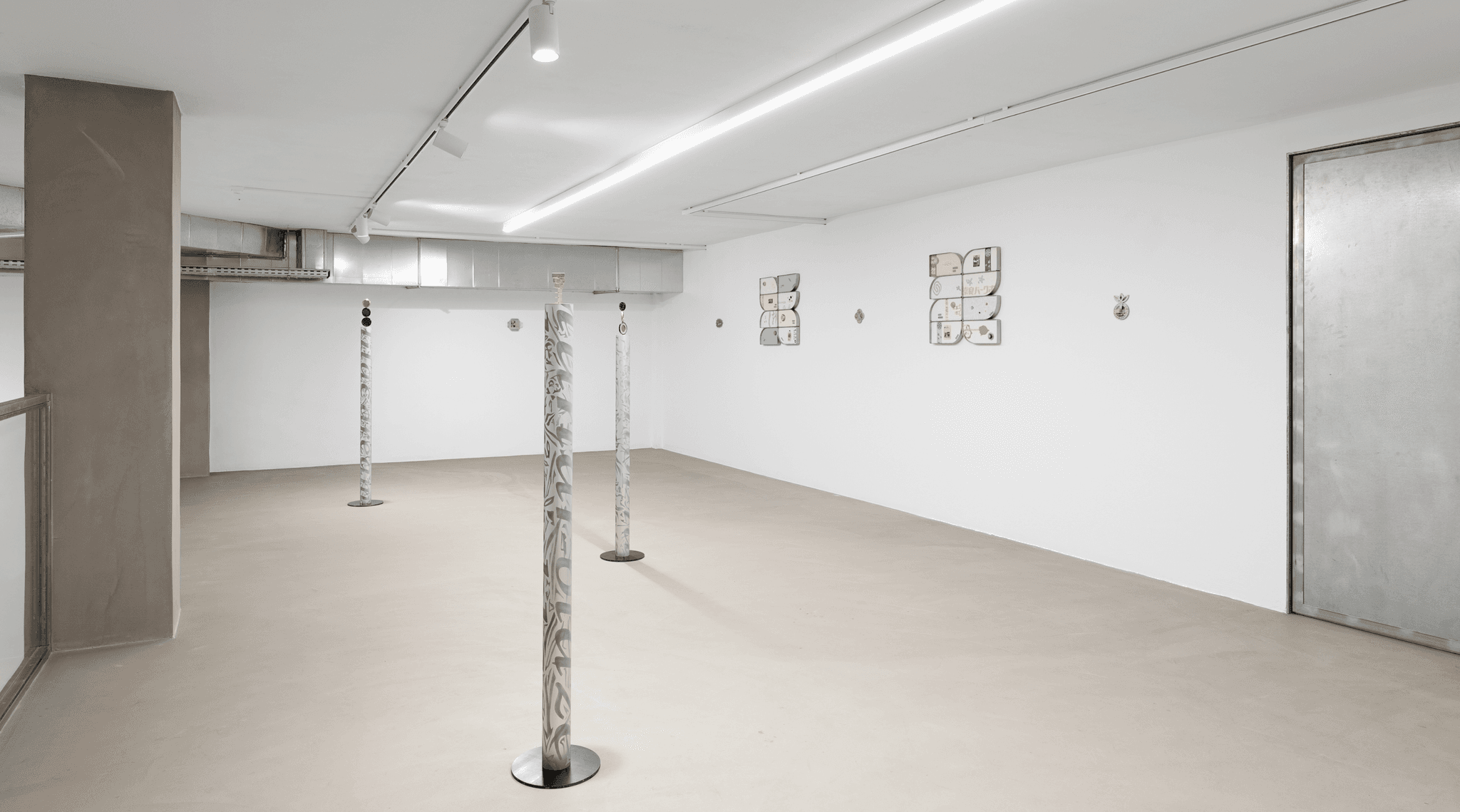
The first encounter is physical. Orchids surround you. Each pole is engraved with writing that identifies the orchid it refers to, carrying their names on their surface. On top, petals made of staples and jar lids assembled into forms that suggest movement, as if caught mid transformation. Their materiality suggests a kind of attachment, a seal or preservation. The number “95”, almost camouflaged, appears in reference to the age of the artists´ grandmother, who has developed a practice of writing things down in order to not forget. Notes, reminders, annotations: throughout the exhibition writing appears as an act of survival, a way to hold on tight to personal information and time.
The body leans in. Small wall-based works pull you closer. The artist´s ongoing kamidana series takes its name after the Japanese word for “god shelf”, referring to miniature altars for offerings and prayers, commonly found in Japanese households and businesses. Within these works, fragments are held in place; behind laser-cut metal surfaces sit partially concealed cuttings from gardening magazines, images of orchids, melons and other cultivated plant varieties. Each work carries different information: aluminium surfaces carry orchid names, numbers, grids, and repeated phrases, that resemble calendars, catalogues and medicine boxes. Afterall, memory is held together through reminders and repetitive actions. Repetition here appears as a form of daily care: taking a pill, marking a day, following routines that structure everyday life.
Then, the body steps back and attention moves outwards across the surface of the larger wall-based panels. Extending into horizontal surfaces, they become carriers of information. Framed in metal, their forms trace the outline of notebooks, planners and diaries, transforming into modular tiles that structure the work. Lined with towels, they hold a deliberate tension between industrial sharpness and domestic softness. What at first reads as a composed surface of display shifts into something closer to an ongoing surface of memory, resembling a refrigerator door slowly accumulating traces of everyday life, a place where fragments are held in place: polaroids, prints, handwritten notes, button packaging, and small metallic and wooden objects. Some are fixed in groups, others loosely placed, as if the composition is still in motion. Information appears only in parts, interrupted. It becomes difficult to distinguish what is original and what is reconstructed, or what has been misremembered over time.
This uncertainty matters. Anna Gonzalez Noguchi is interested in personal histories, intimate systems, and the unofficial archives built inside our homes, drawers, kitchens, notebooks. The deeply human act of keeping things, “just in case”. SUNTOPIA asks what objects are capable of carrying once they outlive their function: Memory, certainly. Evidence of care and desire. Grief and the pressure of time. Perhaps even a fantasy or wish that something can be held onto a little longer before it slips away.
Text by Despoina Tzanou


Works
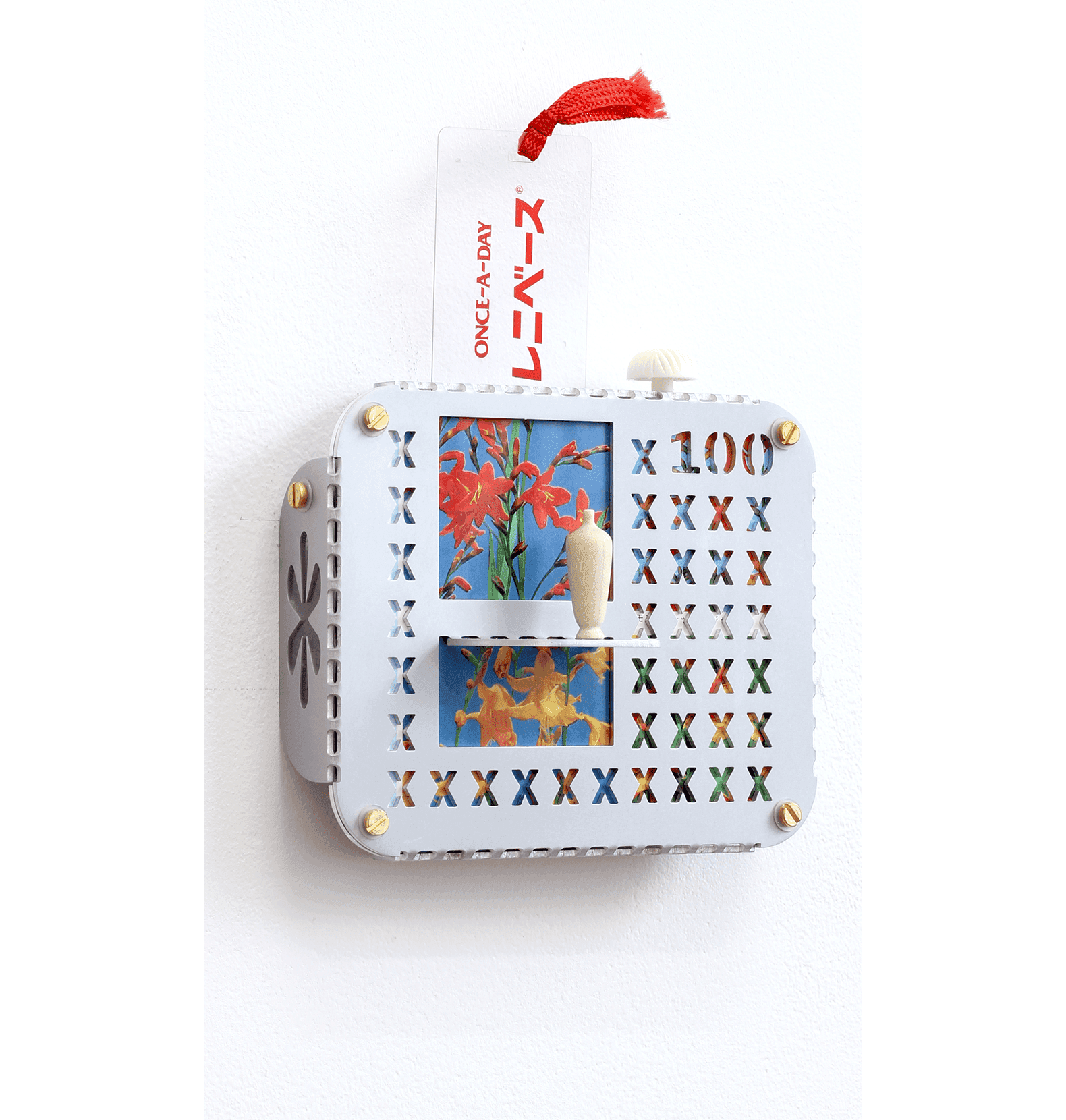
ONCE-A-DAY x 100
Magazine cutting, aluminium, wood, book mark, button
15.5x16x2 cm
ONCE-A-DAY x 100
Anna Gonzalez Noguchi
Magazine cutting, aluminium, wood, book mark, button
15.5x16x2 cm
Enquire
Enquire
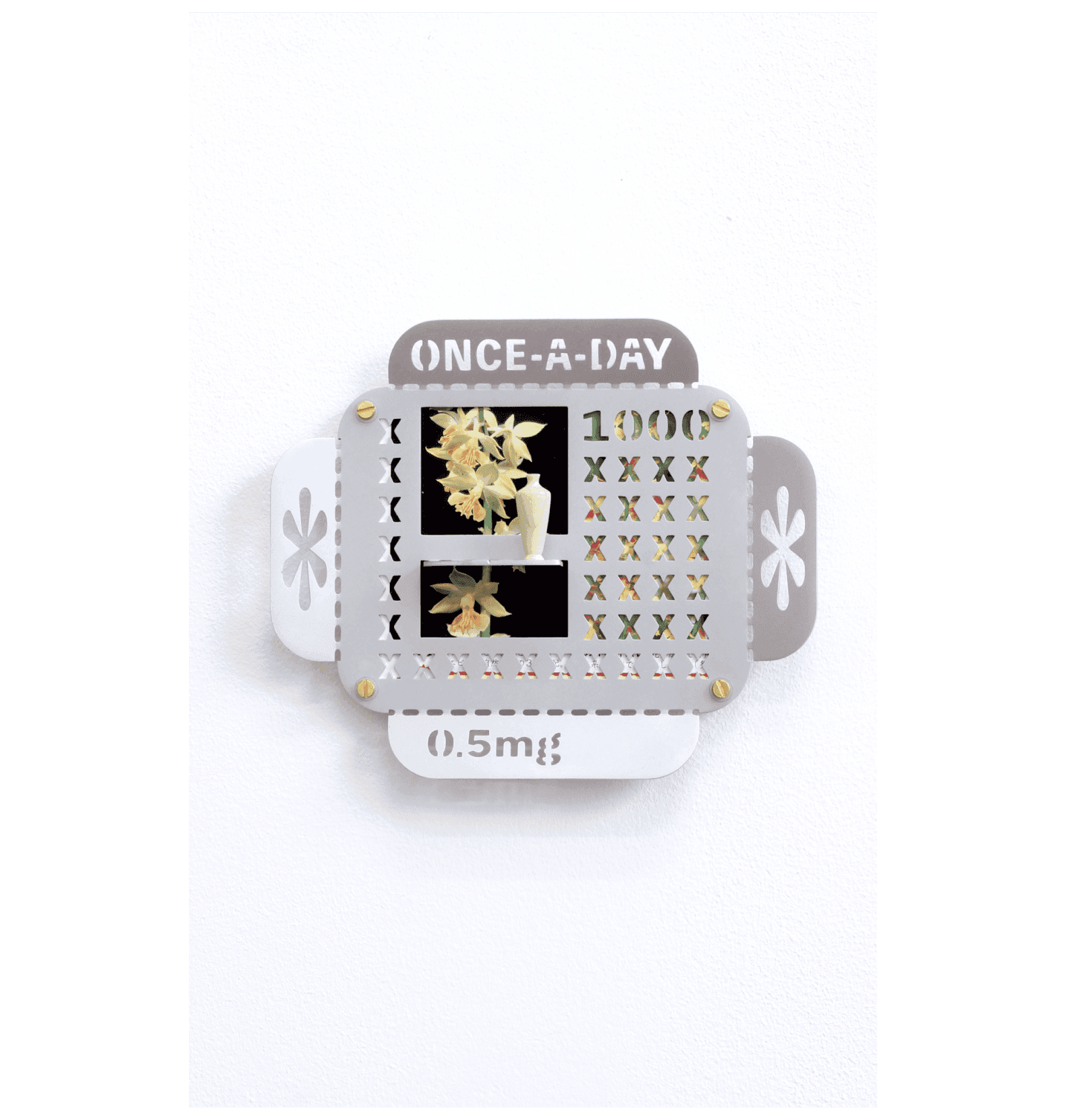
ONCE-A-DAY
Magazine cutting, aluminium, wood
13x16x2.5 cm
ONCE-A-DAY
Anna Gonzalez Noguchi
Magazine cutting, aluminium, wood
13x16x2.5 cm
Enquire
Enquire
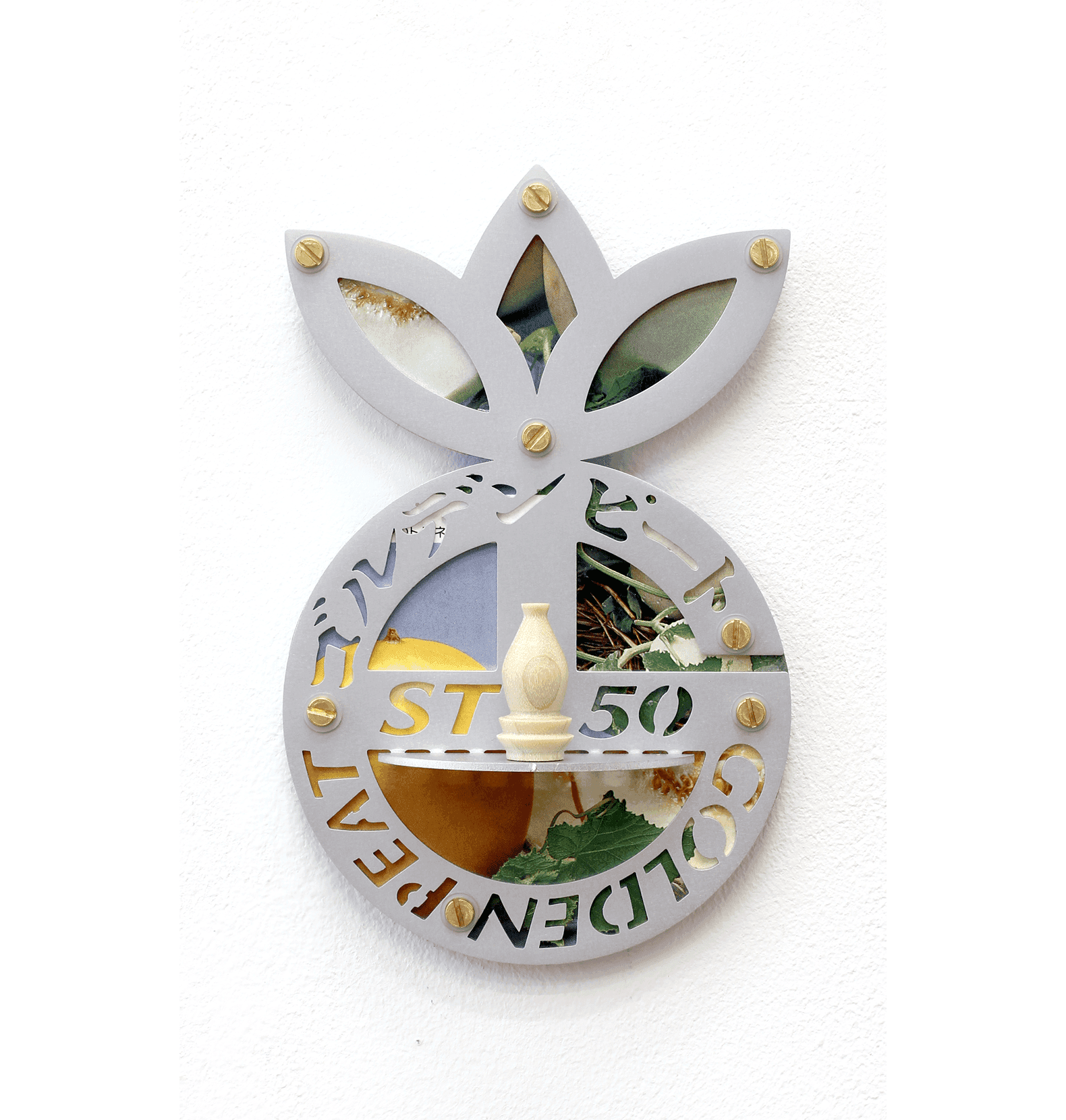
Golden Peat
Magazine cutting, aluminium, wood
14x9x2.5 cm
Golden Peat
Anna Gonzalez Noguchi
Magazine cutting, aluminium, wood
14x9x2.5 cm
Enquire
Enquire
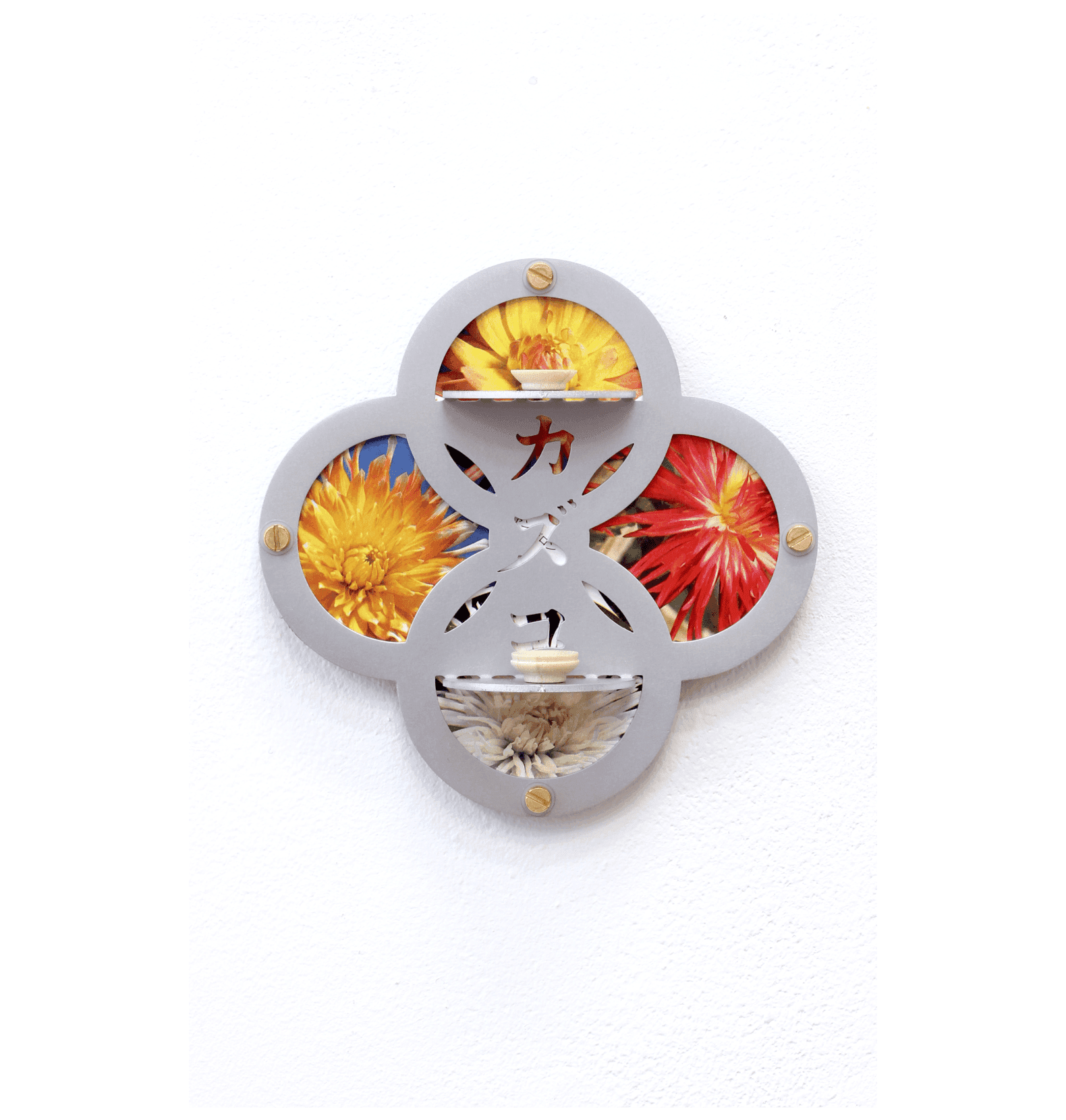
Kazuko
Magazine cutting, aluminium, wood
11x11x2.5 cm
Kazuko
Anna Gonzalez Noguchi
Magazine cutting, aluminium, wood
11x11x2.5 cm
Enquire
Enquire
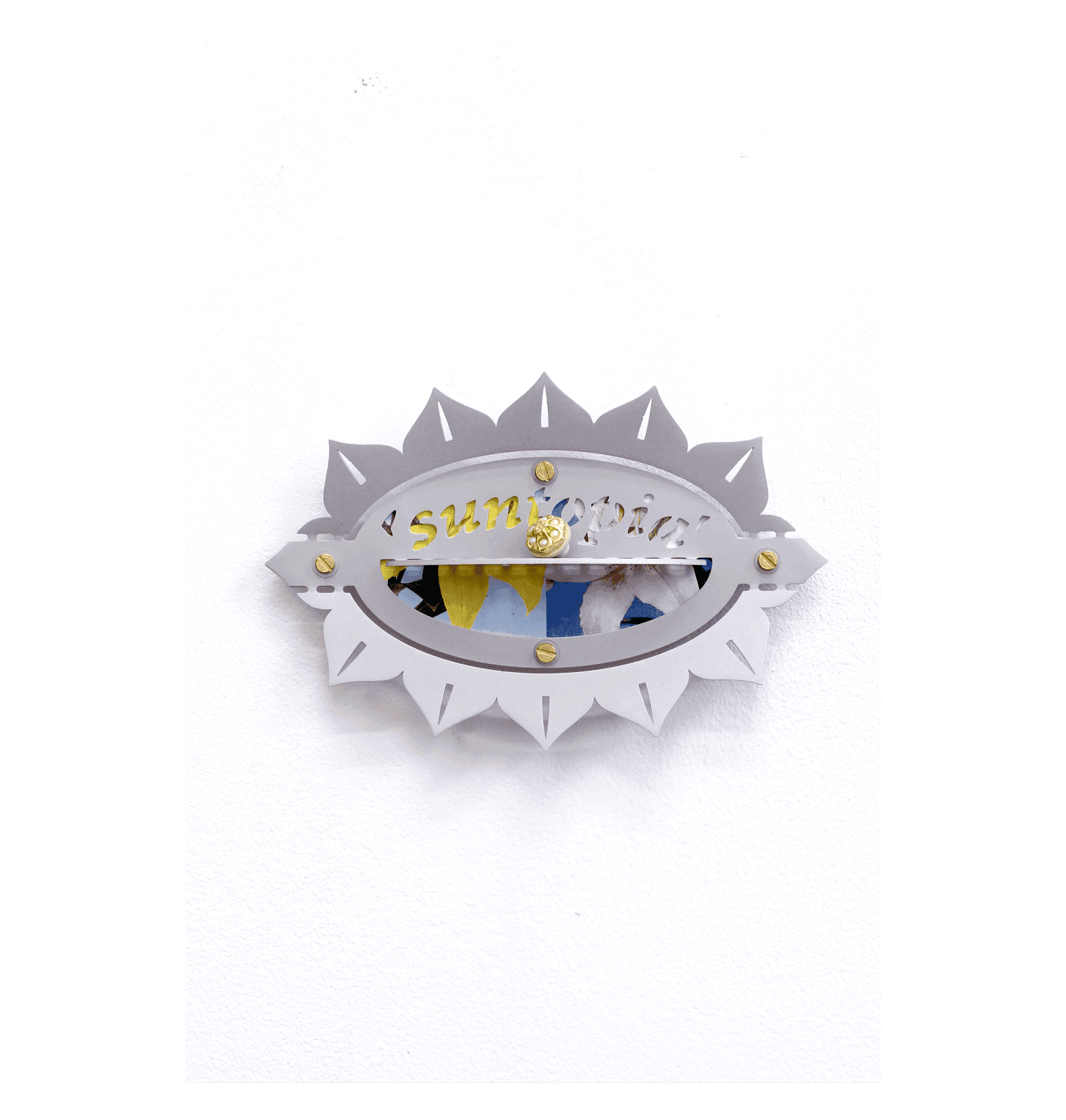
Suntopia P. 20
Magazine cutting, aluminium, wood, button
10x15x2.5 cm
Suntopia P. 20
Anna Gonzalez Noguchi
Magazine cutting, aluminium, wood, button
10x15x2.5 cm
Enquire
Enquire
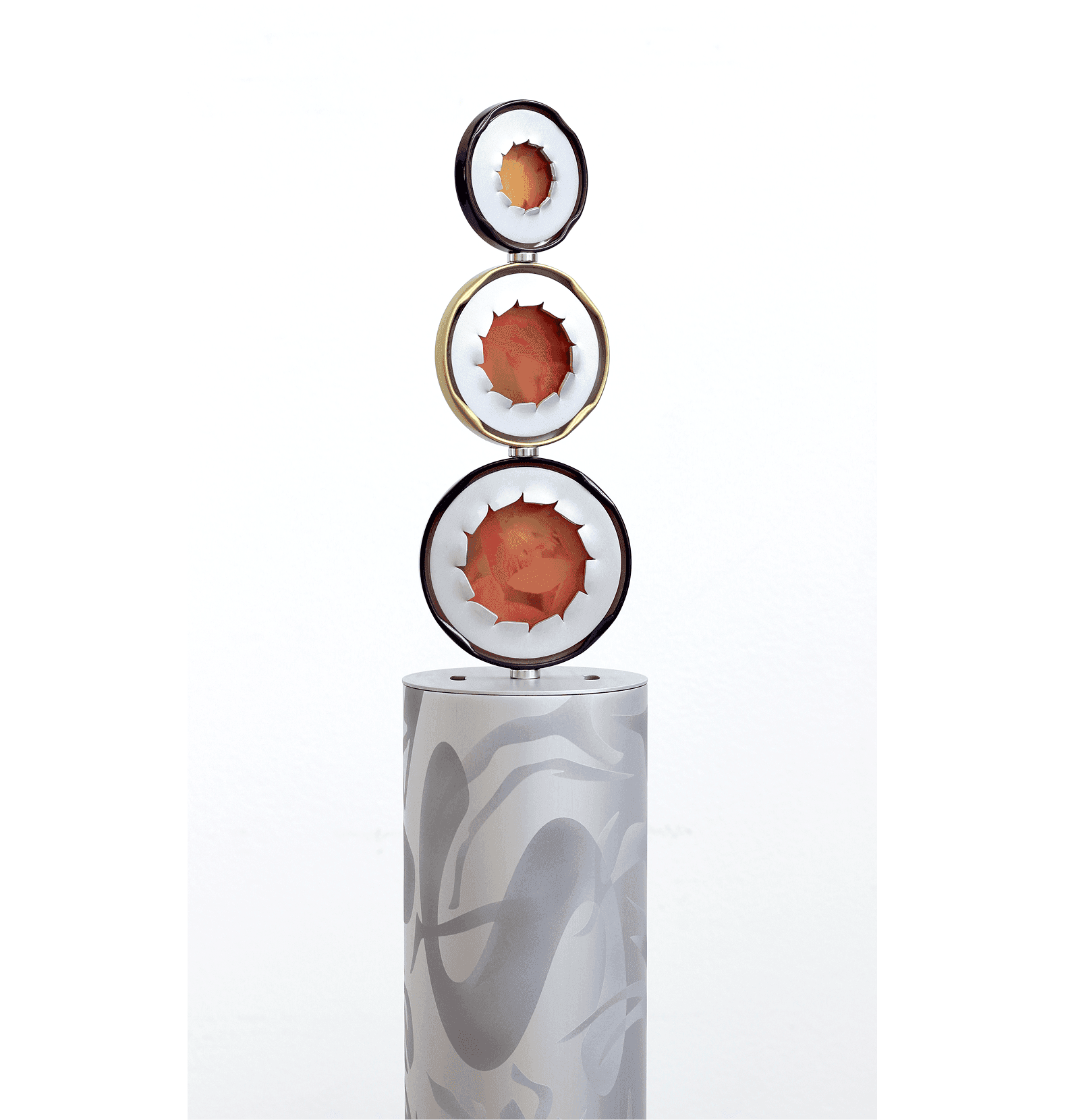
Suntopia
Engraved aluminium, engraved jar caps, photographs prints,magnets
144x8x8 cm
Suntopia
Anna Gonzalez Noguchi
Engraved aluminium, engraved jar caps, photographs prints,magnets
144x8x8 cm
Enquire
Enquire
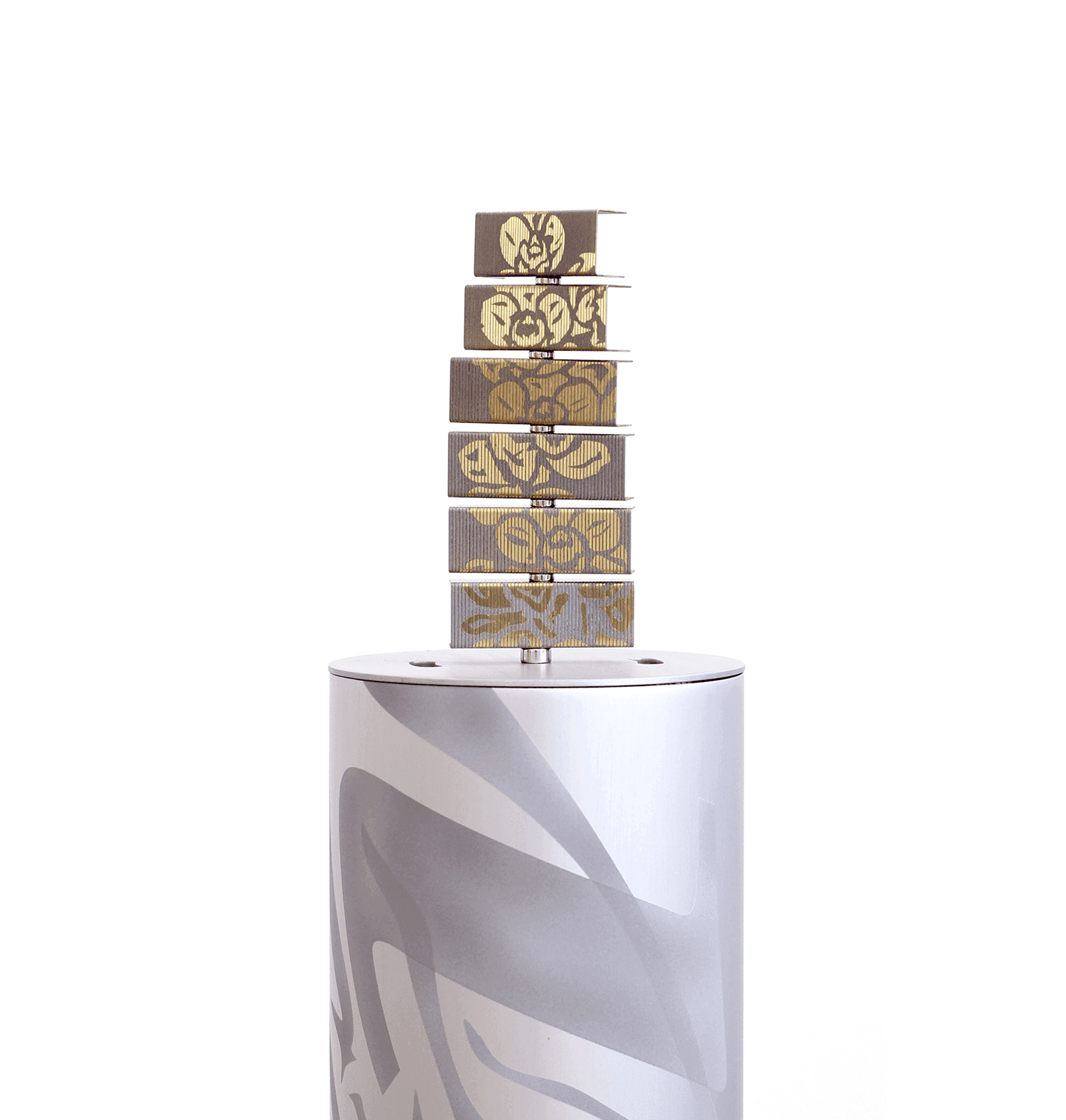
Lunar Blaze
Engraved aluminium, engraved staples and magnets.
141 x 8 x 8 cm
Lunar Blaze
Anna Gonzalez Noguchi
Engraved aluminium, engraved staples and magnets.
141 x 8 x 8 cm
Enquire
Enquire
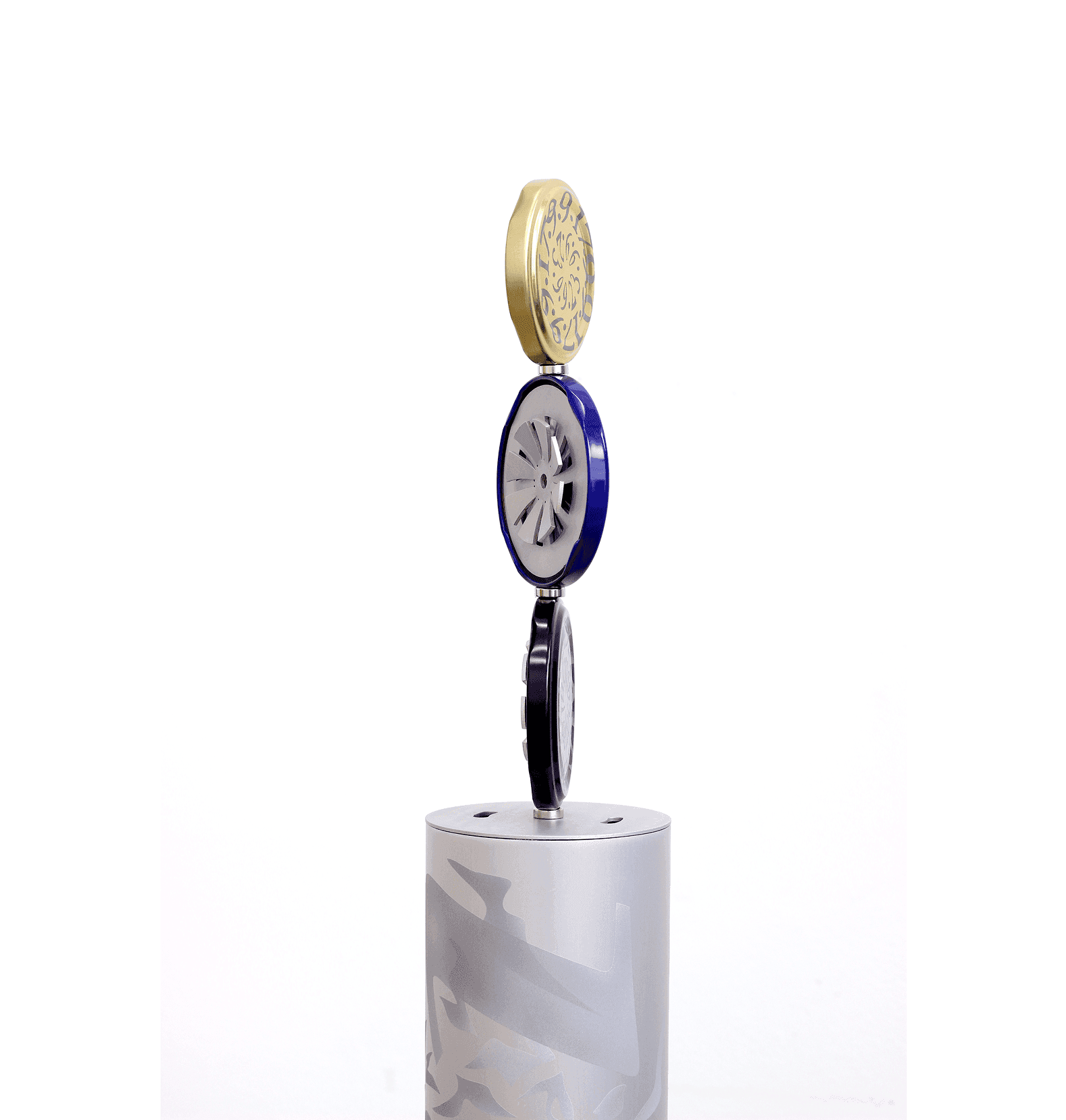
Lilac Dream
Engraved aluminium, engraved jar caps, photographs prints,magnets.
154 x 8 x 8 cm
Lilac Dream
Anna Gonzalez Noguchi
Engraved aluminium, engraved jar caps, photographs prints,magnets.
154 x 8 x 8 cm
Enquire
Enquire
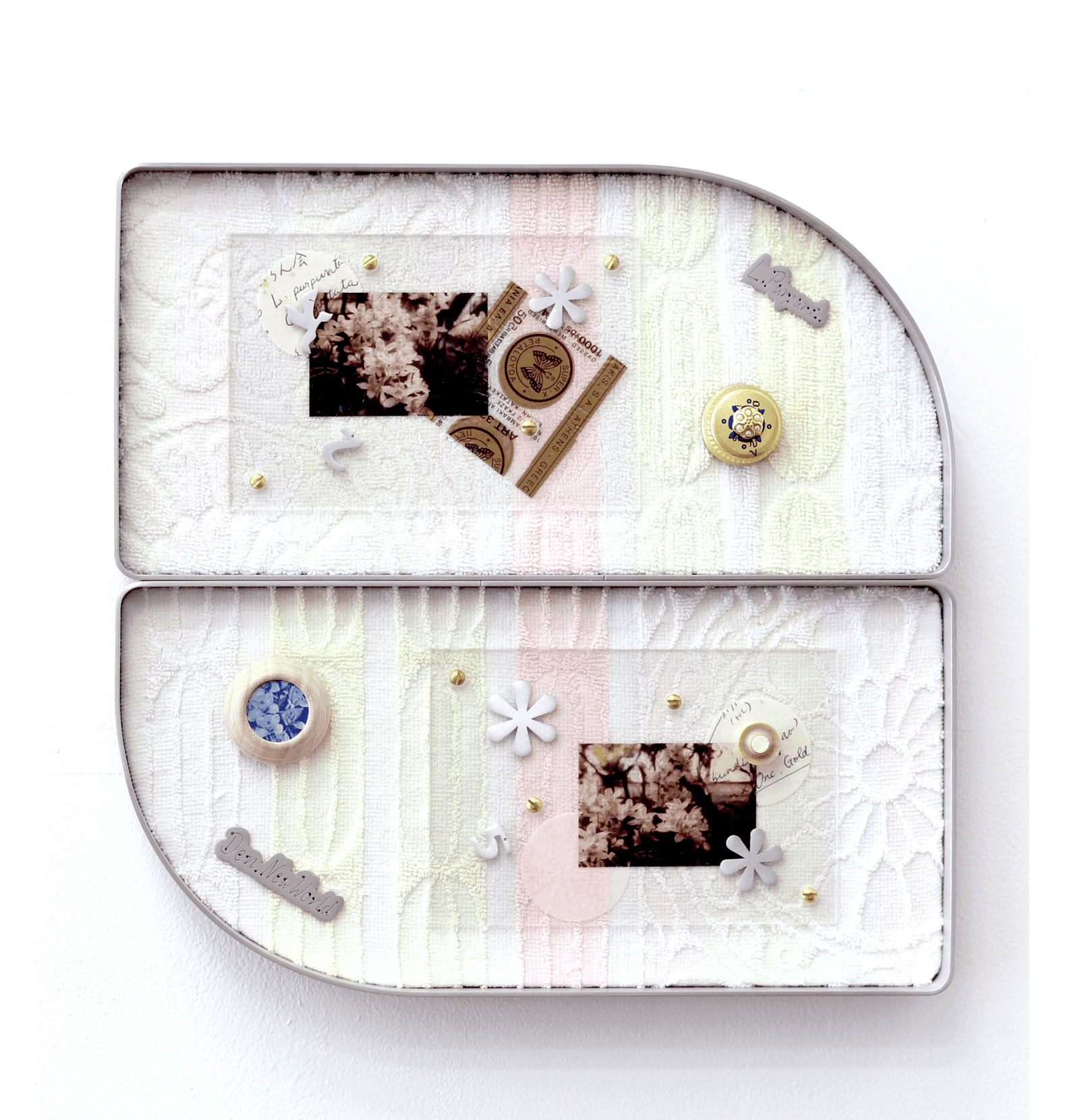
Den. New World
Hand towels, magnets, buttons, caps, used, packaging, perspex, wood, photographic prints, magazine cutting aluminium.
30x30.5x4 cm
Den. New World
Anna Gonzalez Noguchi
Hand towels, magnets, buttons, caps, used, packaging, perspex, wood, photographic prints, magazine cutting aluminium.
30x30.5x4 cm
Enquire
Enquire
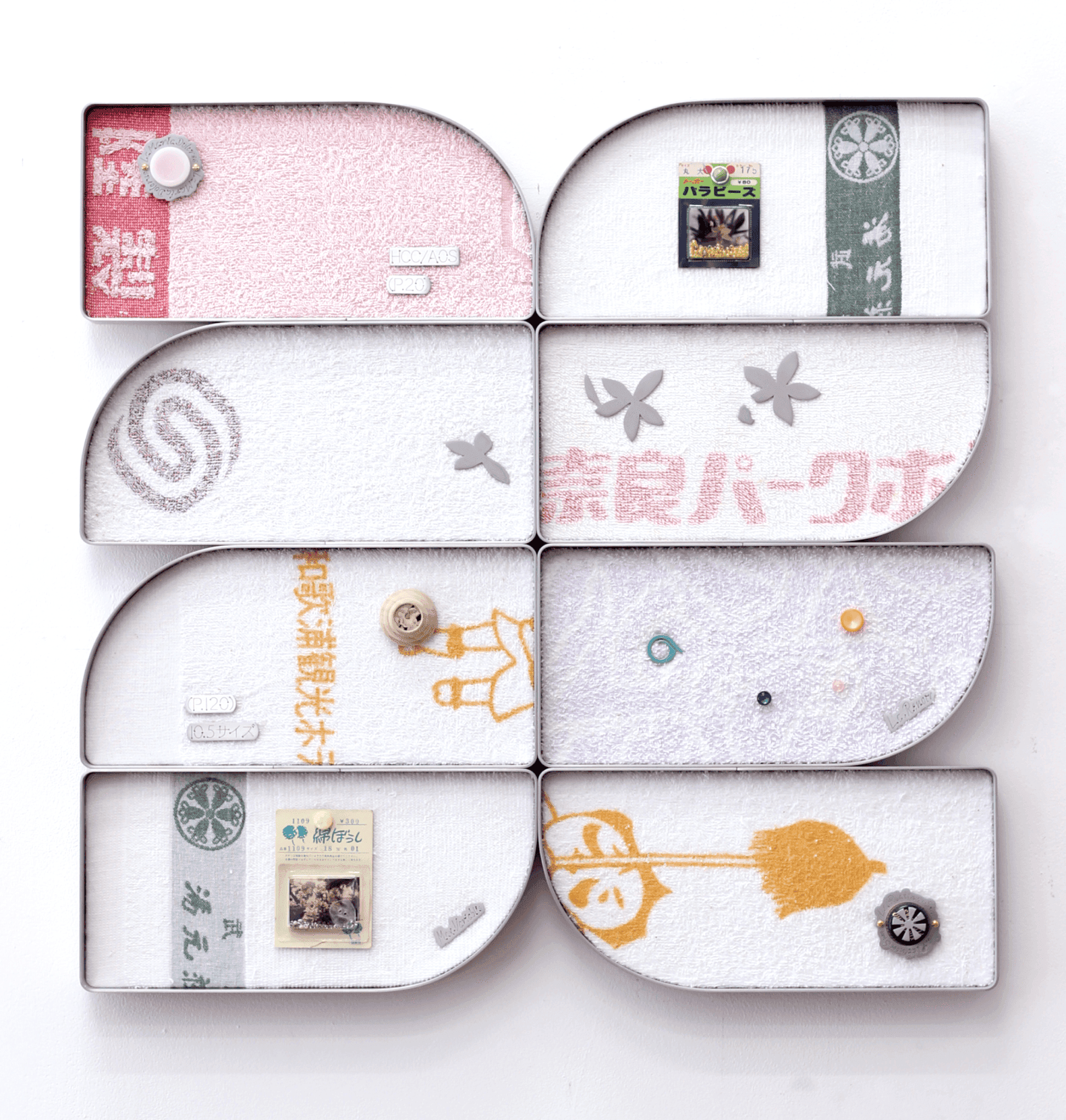
Lc. Renoir
Hand towels, magnets, buttons, caps, used packaging, wood, photographic prints, magazine cutting aluminium.
60x61x4 cm
Lc. Renoir
Anna Gonzalez Noguchi
Hand towels, magnets, buttons, caps, used packaging, wood, photographic prints, magazine cutting aluminium.
60x61x4 cm
Enquire
Enquire

C. Maxima
Hand towels, magnets, buttons, caps, used, packaging, staples, wood, photographic prints, magazine cutting, aluminium.
60x61x4 cm
C. Maxima
Anna Gonzalez Noguchi
Hand towels, magnets, buttons, caps, used, packaging, staples, wood, photographic prints, magazine cutting, aluminium.
60x61x4 cm