Plagues
Patrick Goddard
19.09.26 — 05.03.27
With: Patrick Goddard.
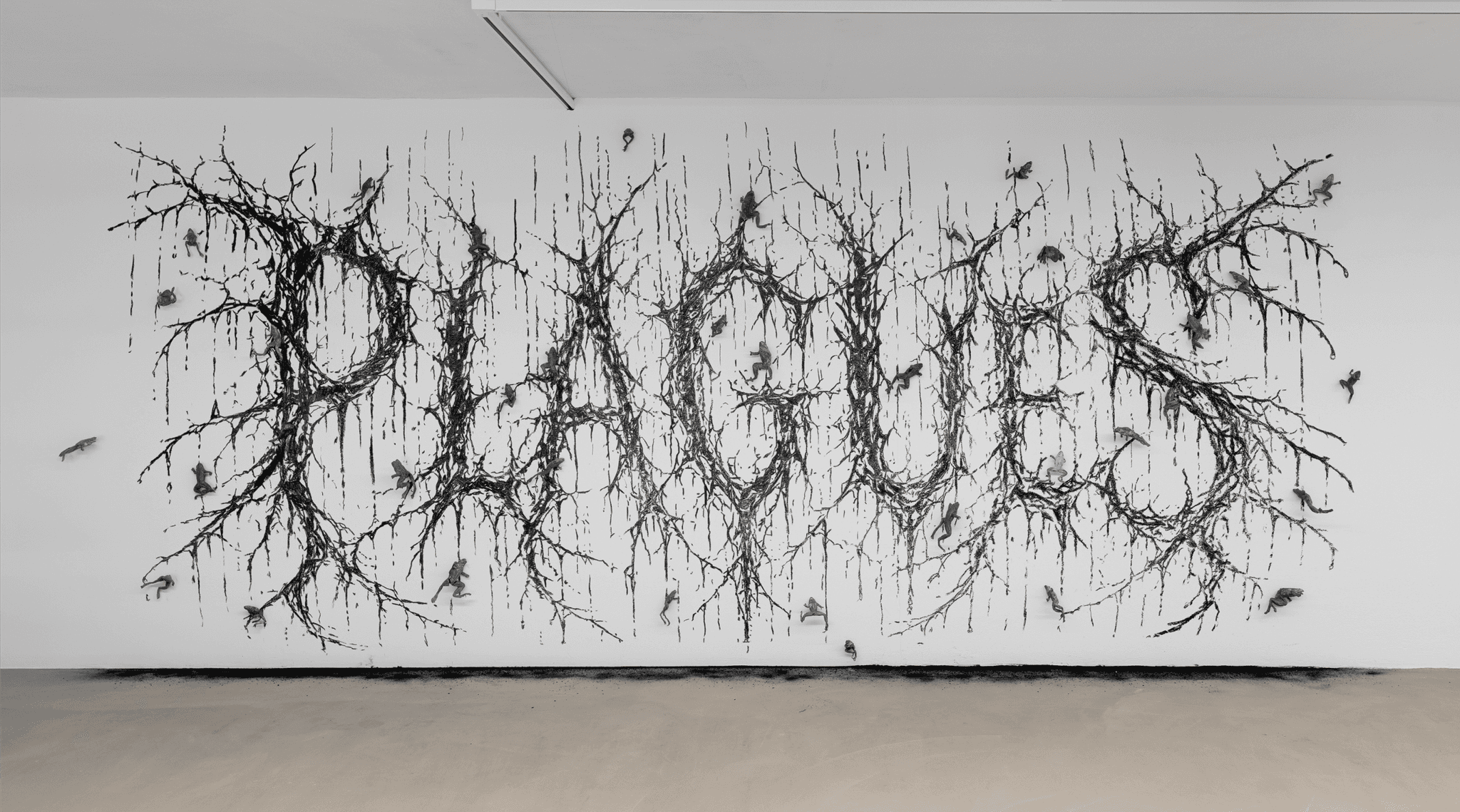
There is always someone drawing the line between bodies that belong and those that threaten. The word “plague” is never neutral. It names whatever multiplies without permission: locusts, frogs, a virus, a body that fits nowhere within an existing register. Patrick Goddard takes the word as the title of his first exhibition at the gallery, using it to examine the systems that determine where that line is drawn.
Men in the Bushes II and Swan open the exhibition. Both charcoal drawings belong to Denizens, a series made in 2025 from thermal photographs taken at night in Wanstead Flats, the last surviving stretch of common land in East London, surrounded by the advance of private ownership. For centuries, these were shared lands where anyone could graze animals or gather firewood, until the enclosure laws gradually turned common land into private property. Wanstead Flats survived an uprising, in 1871, thousands of people tore down the fences erected by a landowner seeking to claim the land as his own. For centuries, the tittle of “denizen” was a legal category in English law, describing someone who lived in a place without enjoying the full rights of a citizen.
Today, the Flats are inhabited by a raw, collective body: those looking for drugs, furtive sex, or simply a corner where no one will ask questions; migrants setting up makeshift camps; teenagers escaping the gaze of adults; and animals reclaiming, for a few hours, a territory that during the day is little more than a place to pass through. The thermal camera turns them into what the artist calls “anonymous and equivalent figures”, asking who is allowed to be seen, which bodies the city chooses to look at, and which become its own plague.
Plague places thirty-eight lead frogs across the wall. If, in Denizens, the body is heat on the verge of dissolving, here it becomes matter: heavy, solid and occupying space. Goddard has developed similar series with birds and snails, turning repetition into a method for producing multitudes.
Unlike the individual body, observed on its own, the plague is defined by the loss of singularity within a mass that falls and multiplies beyond control. Neither religious nor scientific traditions have managed to redeem it. Written by and for humans, they have rarely maintained the same gaze when it turns back towards the species that created them. Perhaps the plague is what we would rather not recognise in the limitless expansion of our own bodies.
The film Animal Antics carries this question into the near future of a zoo, where the last inhabitants of The Wild remain behind bars while Whoopsie, a pedigree dog, walks among them with her owner, Sarah. Of all those present, only she has a voice. Only the domesticated, selected and named are granted that privilege. For the artist, "the wild" designates that which lies outside capitalist relations and which capitalism therefore refuses to value.
If the plague is the body that multiplies without permission until it loses its name, pedigree is its opposite: the individual legitimised by lineage. Between these two extremes, the zoo orders what remains — bodies that no longer threaten or belong, but are simply kept. What changes, over time, is which body comes to be seen as a plague.


Works
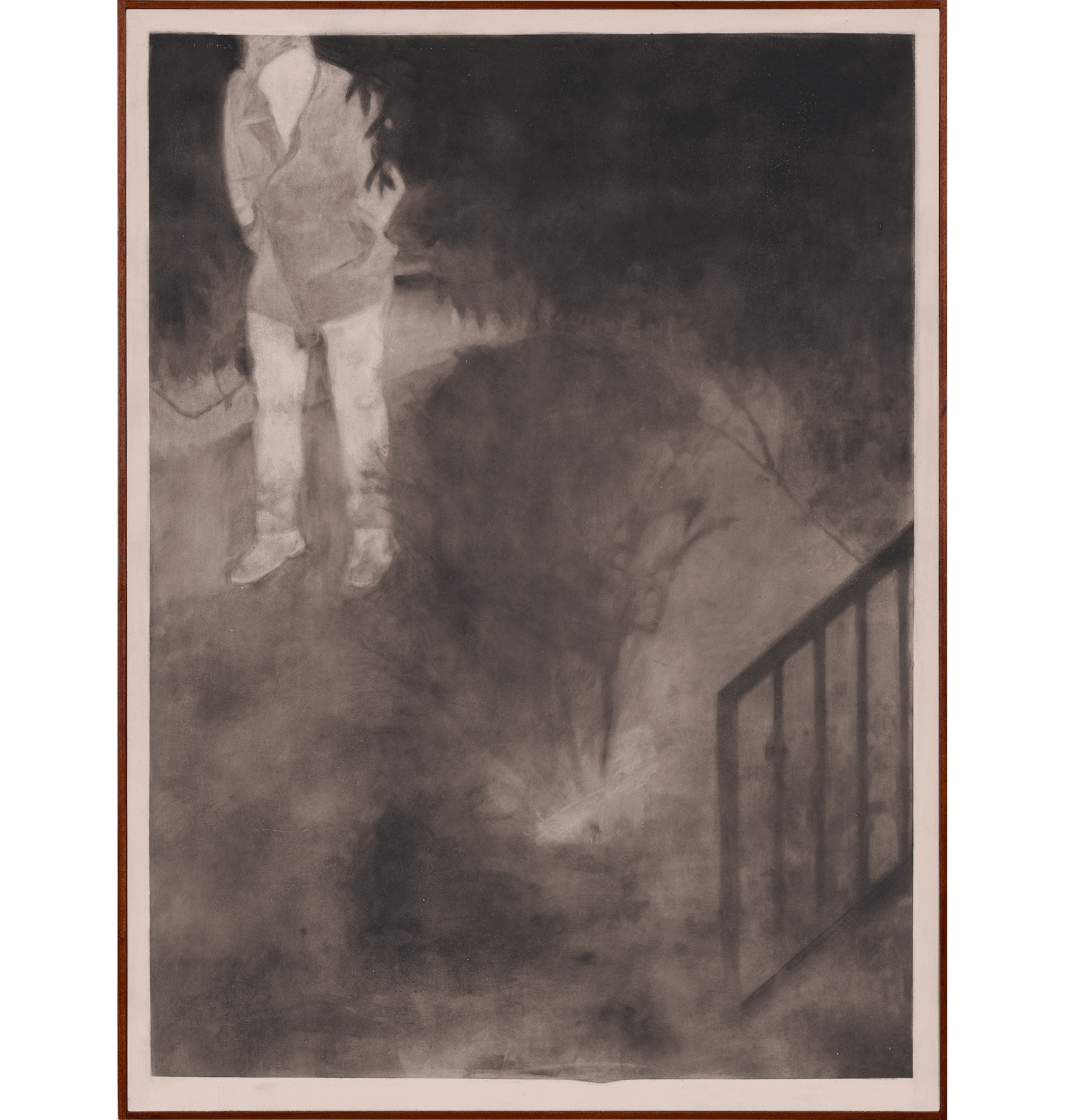
Man in the Bushes I
Charcoal on board, framed
92 x 122cm
Man in the Bushes I
Patrick Goddard
Charcoal on board, framed
92 x 122cm
Enquire
Enquire
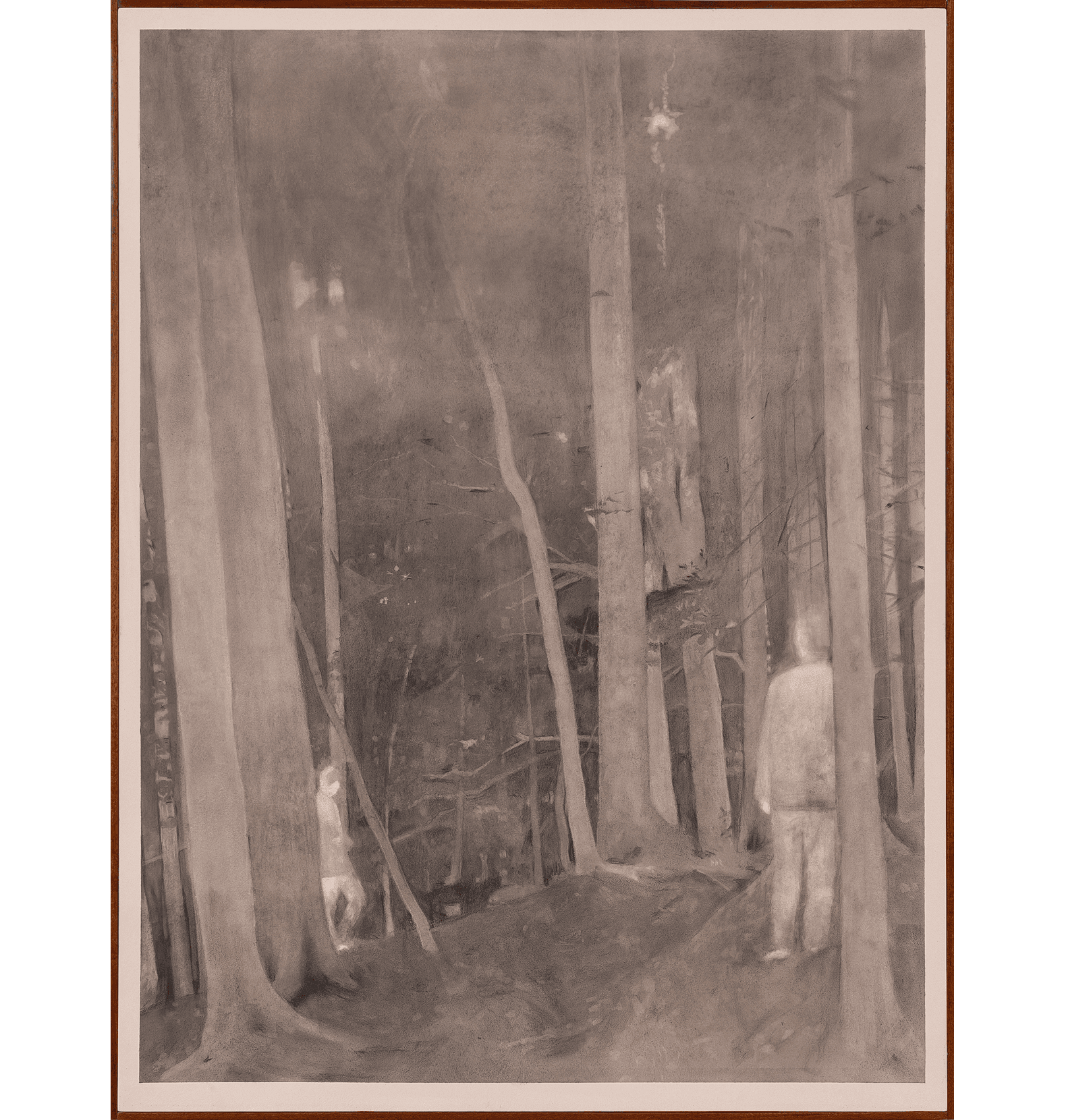
Men in the Bushes II
Charcoal on board, framed
92 x 122cm
Men in the Bushes II
Patrick Goddard
Charcoal on board, framed
92 x 122cm
Enquire
Enquire
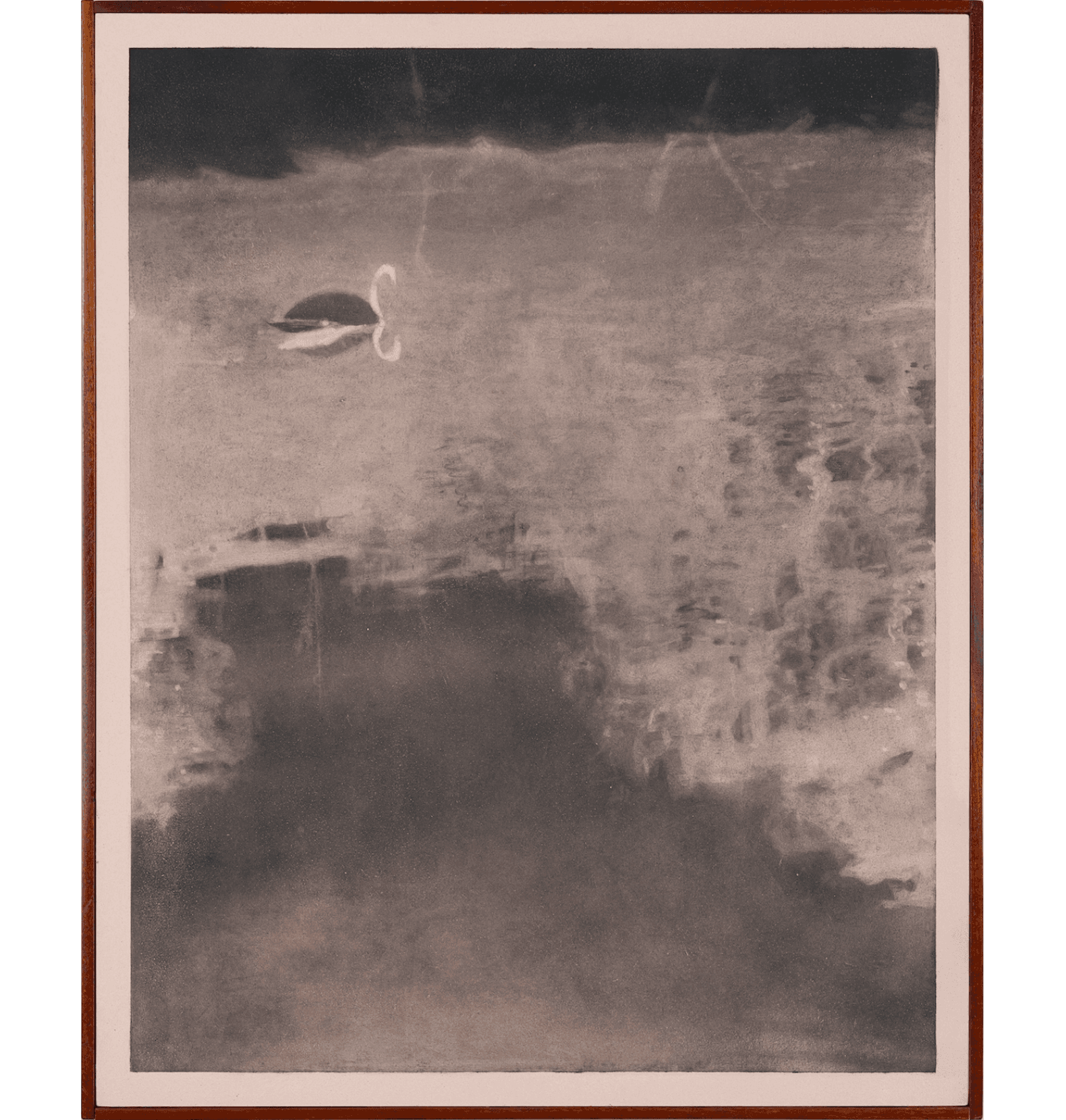
Swan
Charcoal on board, framed
64x79cm
Swan
Patrick Goddard
Charcoal on board, framed
64x79cm
Enquire
Enquire
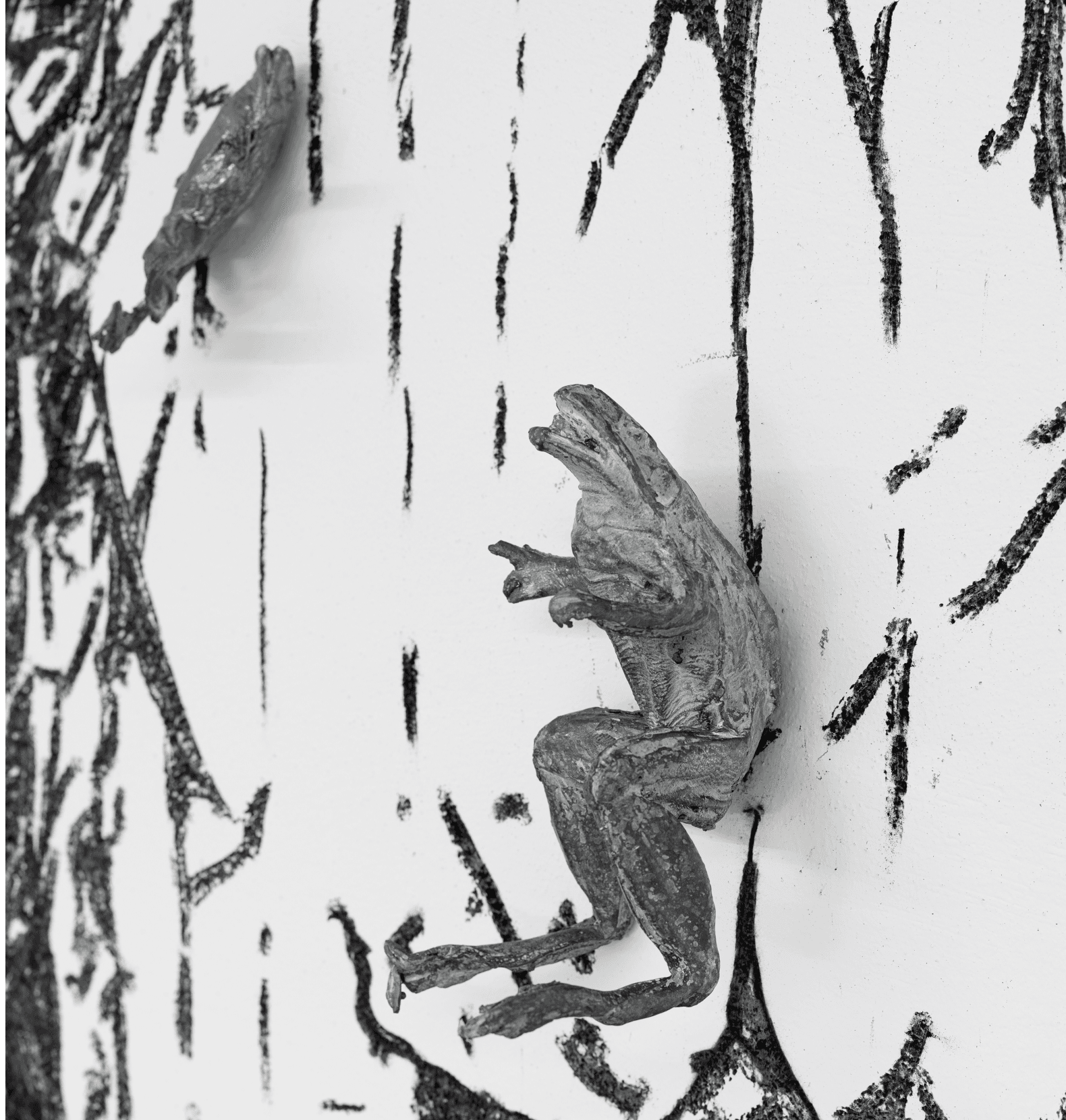
Plague
Lead recycled from demolished houses
Unique work in 38 parts
Plague
Patrick Goddard
Lead recycled from demolished houses
Unique work in 38 parts